
 EN
EN


Is Split Wire Loom Suitable for Automotive Use?
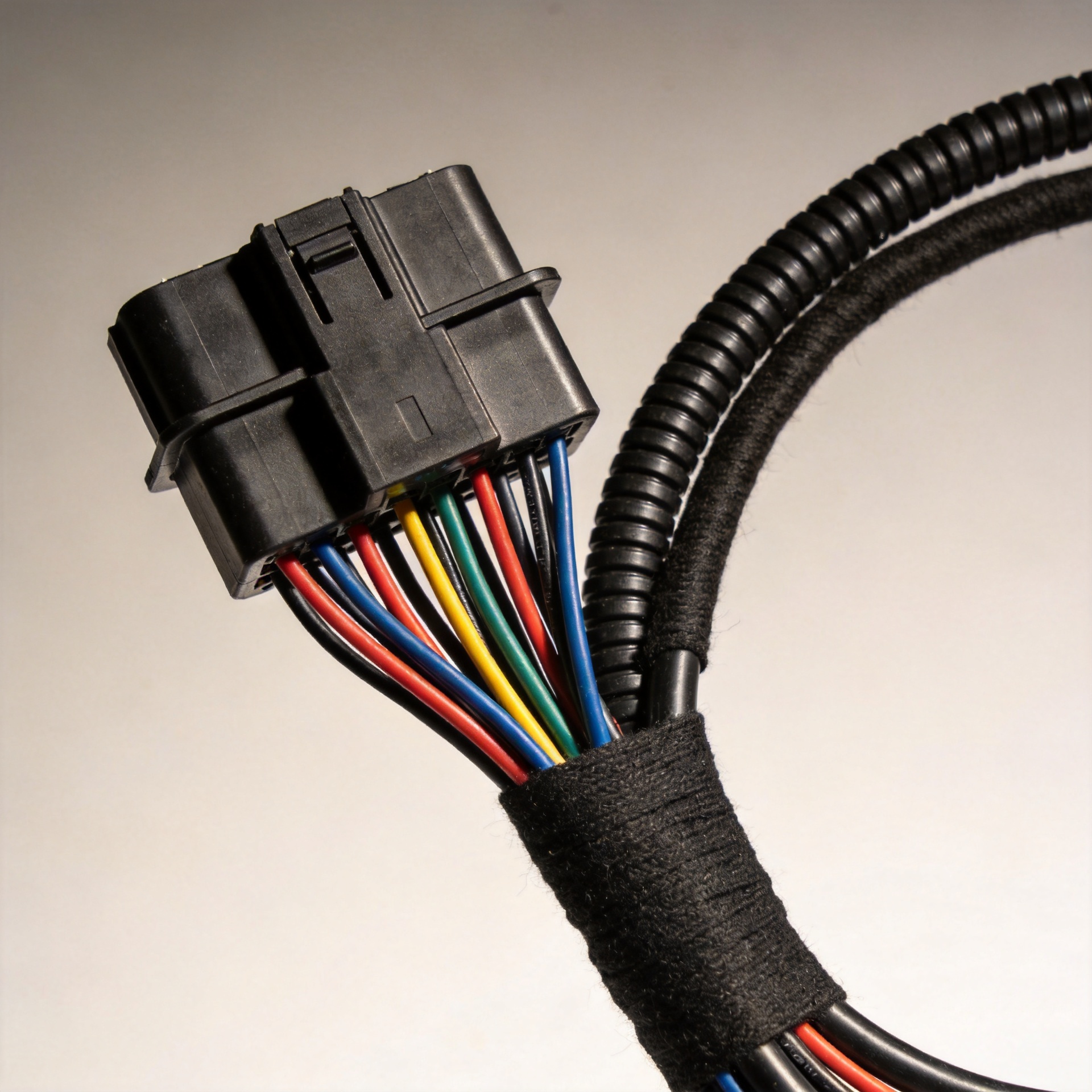
If you've ever searched for a quick way to organize a wiring harness on a vehicle, split wire loom is one of the first products that comes up. It's fast to install, easy to cut, and costs very little per meter. Whether it's actually suitable for your specific automotive application depends more on the material and the environment than the product category itself.
The short answer: yes, split wire loom can work for automotive use — in the right zones, with the right material grade. The longer answer is that "automotive" covers everything from door panels to underhood engine routing, and those environments make very different demands on cable protection materials.
What Split Wire Loom Does in Automotive Wiring
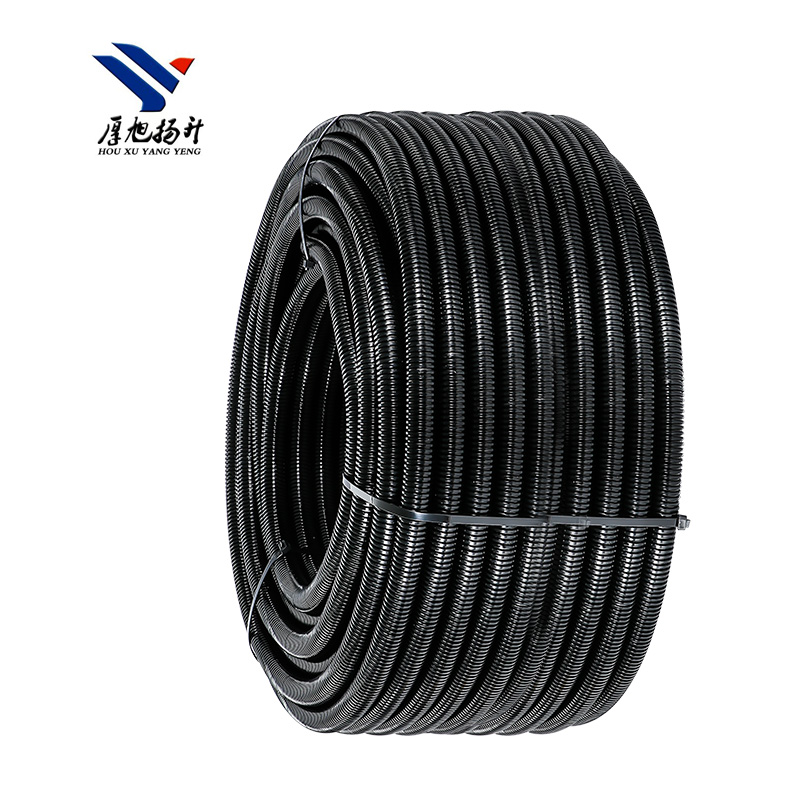
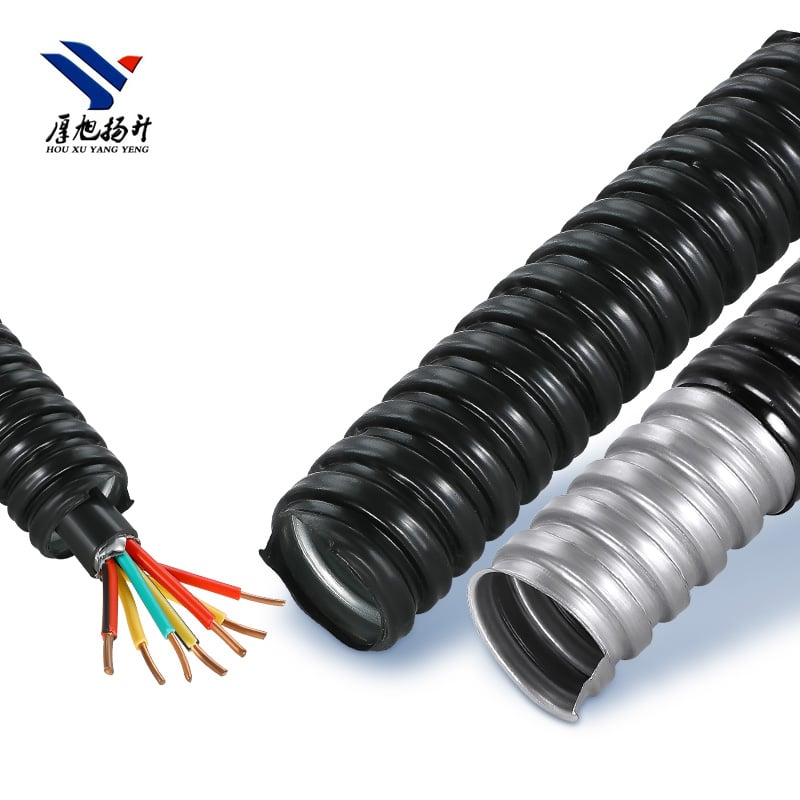
Split wire loom — sometimes called slit loom tubing or convoluted split loom — is a flexible corrugated tube with a lengthwise slit that lets you insert cables without disconnecting them. In automotive wiring, it typically handles three things:
- Bundling: Grouping multiple wires into a single routed run, which cuts clutter and makes circuit tracing easier during maintenance.
- Abrasion protection: Shielding cable jackets from rubbing against metal edges, body clips, or adjacent hardware.
- Identification: Color-coded or labeled loom helps installers and technicians find the right circuit zone at a glance.
These functions apply across a range of vehicle wiring tasks — from aftermarket audio installations and accessory runs to full harness dressing on production builds.
Where Split Wire Loom Works Well in Automotive Environments
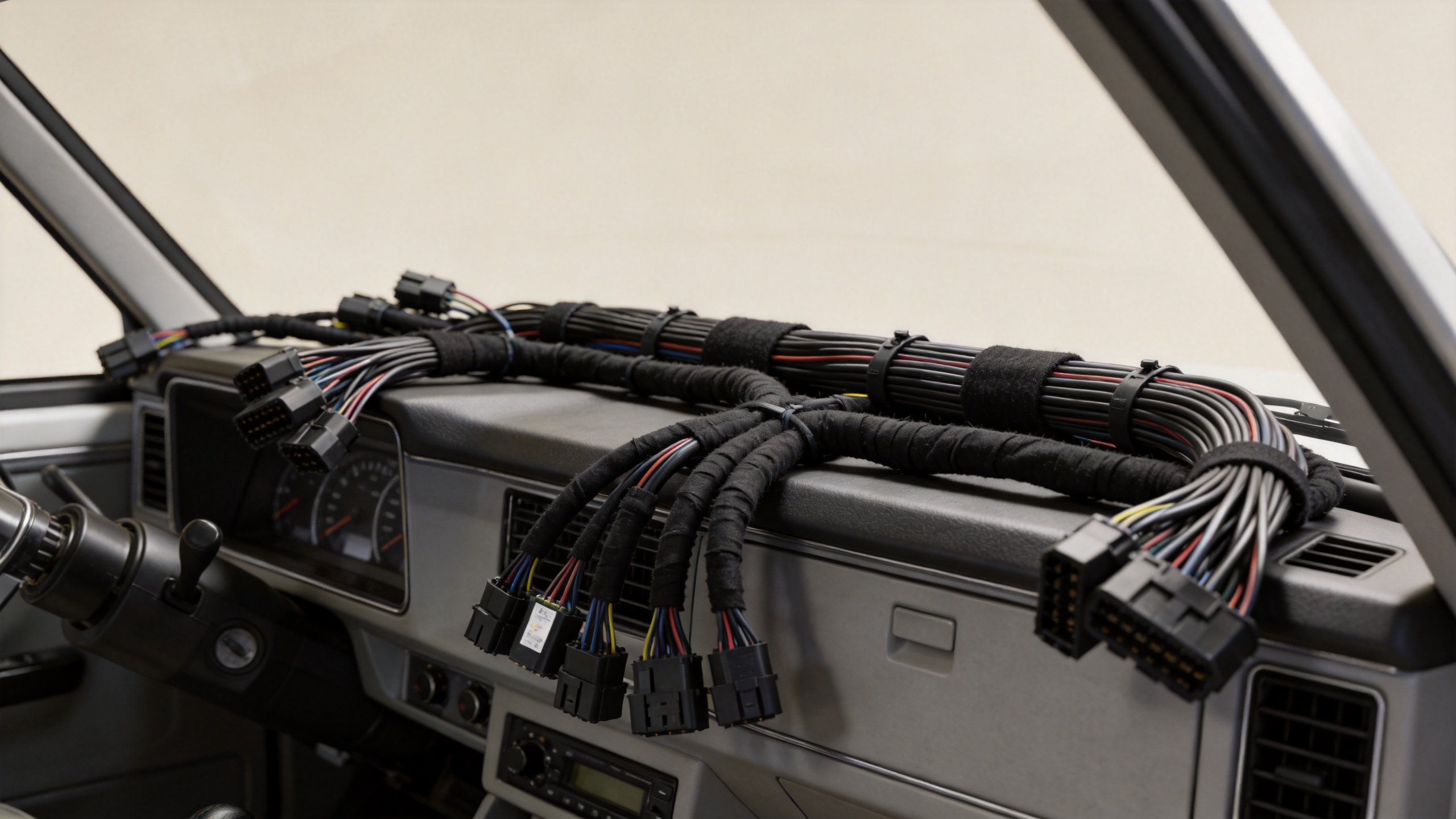
For cabin wiring, door loom runs, and cable routing away from heat sources, split wire loom is a practical choice. Interior zones rarely hit temperatures that challenge standard loom materials, and the ability to retrofit cables through an existing loom run is a real installation advantage.
Split wire loom also handles well in:
- Aftermarket audio and navigation wiring in the dash area
- Trailer and tow harness builds where cables run along the undercarriage away from exhaust
- Chassis harness organization in off-road builds where abrasion is the main risk
- EV and hybrid battery management system cable dressing in accessible, non-thermal zones
In these cases, the split design works in your favor — cables can be added or removed without cutting and re-running the whole loom, which matters when vehicles are being modified or repaired in the field.
Where Standard Split Wire Loom Falls Short
The limitations show up in underhood applications. An engine bay is one of the harder environments a wiring harness passes through — temperatures near the firewall can regularly reach 80–100°C under normal operating conditions, and areas near the exhaust can push well above 120°C in some configurations.
Standard polyethylene (PE) split wire loom softens and deforms at sustained high temperatures. It's not rated for continuous exposure to engine bay heat, and near direct contact with hot surfaces or exhaust radiant heat, it can fail within months.
Worth addressing directly: split wire loom is not a fire barrier. This comes up often in builds where installers assume the loom adds meaningful flame protection. Standard PE loom offers no useful fire resistance — its function is mechanical and organizational. If the installation runs near fuel lines, ignition sources, or any zone with actual flame classification requirements, you need a different product.
The split design also creates an opening issue in dirty environments. The lengthwise slit that makes installation convenient also lets in road debris, oil mist, and moisture. In underhood zones where fluids accumulate, this can wear down the cable jackets inside the loom over time. Closed corrugated conduit, with a sealed wall, handles that better — though at the cost of easy cable access later.
Material Selection: PA Nylon vs. PE in Automotive Use
Material choice matters more than most installers realize when specifying split wire loom for automotive work. The three most common options — polyethylene (PE), polypropylene (PP), and polyamide (PA, or nylon) — have genuinely different performance profiles at temperature.
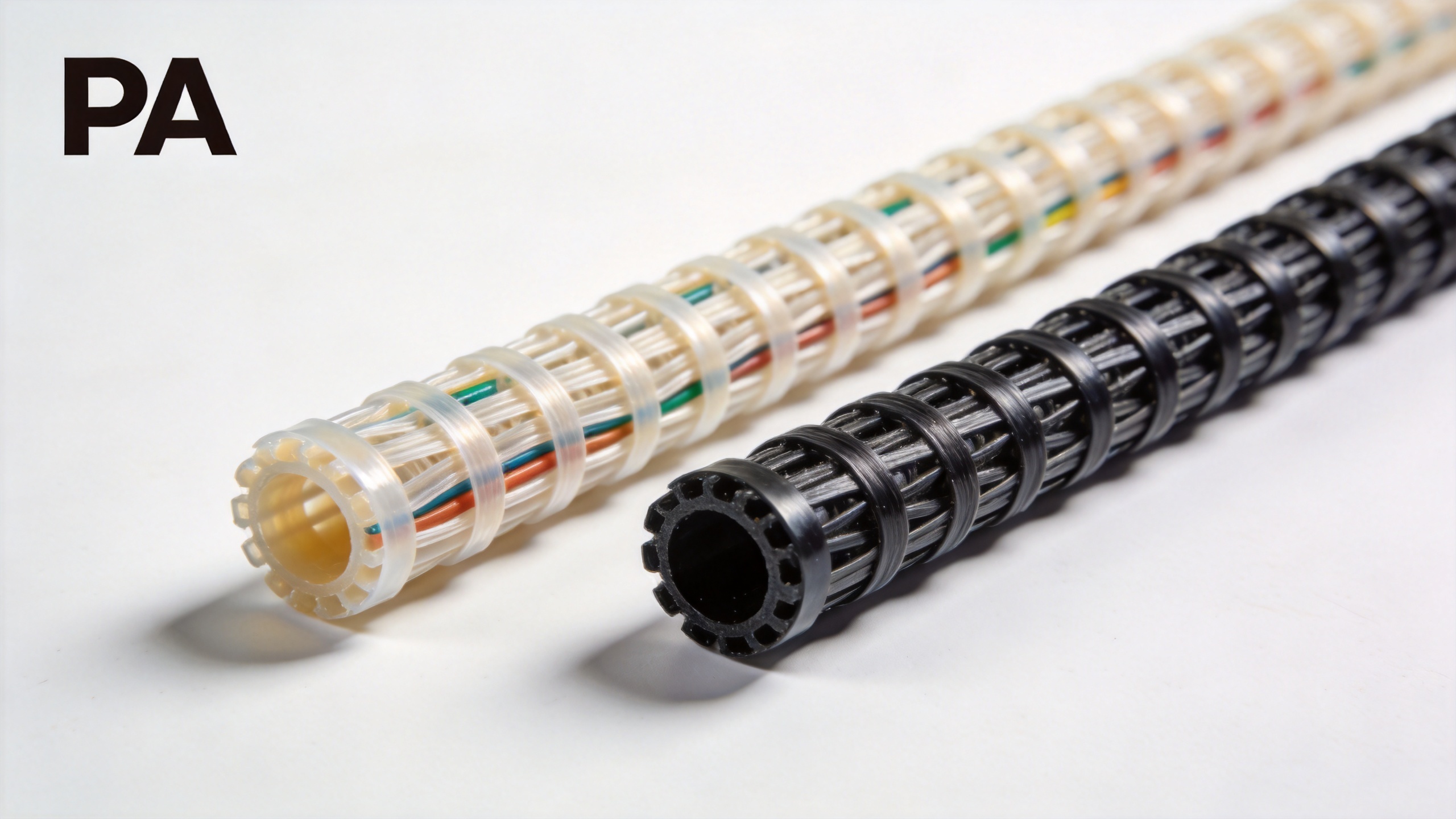
PA nylon split wire loom is the right call for applications with moderate heat exposure. Nylon grades appropriate for automotive work typically handle -40°C to around 150°C (-40°F to 300°F), and quality nylon loom carries a 94HB flame resistance rating. That makes PA nylon a reasonable spec for underhood use in zones with elevated ambient heat, as long as the loom isn't against a direct heat source.
PE loom is rated lower and has no meaningful flame resistance. It holds up well in cabin, door, and undercarriage routing where temperatures stay moderate, but it shouldn't be called out for underhood zones near the engine or exhaust runs.
PP sits between PE and PA for heat tolerance, and is often specified where chemical exposure is a factor — battery fluid, cleaning agents, or coolant splash in some vehicle configurations.
When the routing zone runs above 80°C sustained, or there's any chance of fluid exposure, PA nylon is the grade to specify. If you're uncertain, checking the supplier's published temperature range and flame rating before committing to an order is time well spent.
Practical Guidance for Automotive Loom Selection
A few points that hold across most automotive split loom installations:
- Diameter matching matters. Oversized loom stays open on vertical runs, leaving the slit gap wide. Undersized loom puts pressure on the cables at insertion. The loom should close naturally around the bundle with only light force at the slit edges.
- Specify flame-retardant grades for under-dash and under-hood routing. Even in lower-temperature zones, proximity to electrical components makes the modest cost premium for flame-rated material worthwhile.
- Don't treat split loom as heat shielding near exhaust. Where exhaust heat is a real factor, proper heat-shielded sleeving or closed-wall high-temperature conduit handles it correctly.
- Future cable access is an underrated factor. The main advantage of split loom over tape or solid conduit is that cables can be added, removed, or traced later without cutting the run. If service access matters, this often tips the decision.
There's also a cost-of-labor point worth keeping in mind. Opting for a lighter-duty loom grade on a difficult routing path looks economical at purchase. If that loom degrades within a short service period, the labor to re-route and re-dress the harness costs more than the original material saving. Getting the material grade right at spec time is simpler math.
Summary
Split wire loom is a practical product for automotive wiring when used in the right zones with the right material. For cabin, door, undercarriage, and low-heat interior routing, standard PE or PP loom performs reliably. For underhood work and zones with sustained elevated temperatures, PA nylon rated at 94HB is the appropriate spec.
The limitations are consistent and avoidable: split wire loom is not a fire barrier, it isn't suited for direct heat source contact, and it needs material compatibility confirmation before going near chemical exposure. Within those bounds, it remains a cost-effective and installation-friendly option for most automotive cable management applications.
Suppliers covering split wire loom in multiple material grades — PA nylon, PP, and PE — let specifiers and procurement teams work from a single product family across different vehicle zones without switching sources. When evaluating a loom range for automotive work, confirming the supplier's material coverage and sizing consistency across grades is a useful first step.