 EN
EN
Wenzhou, China – May 23, 2025 –
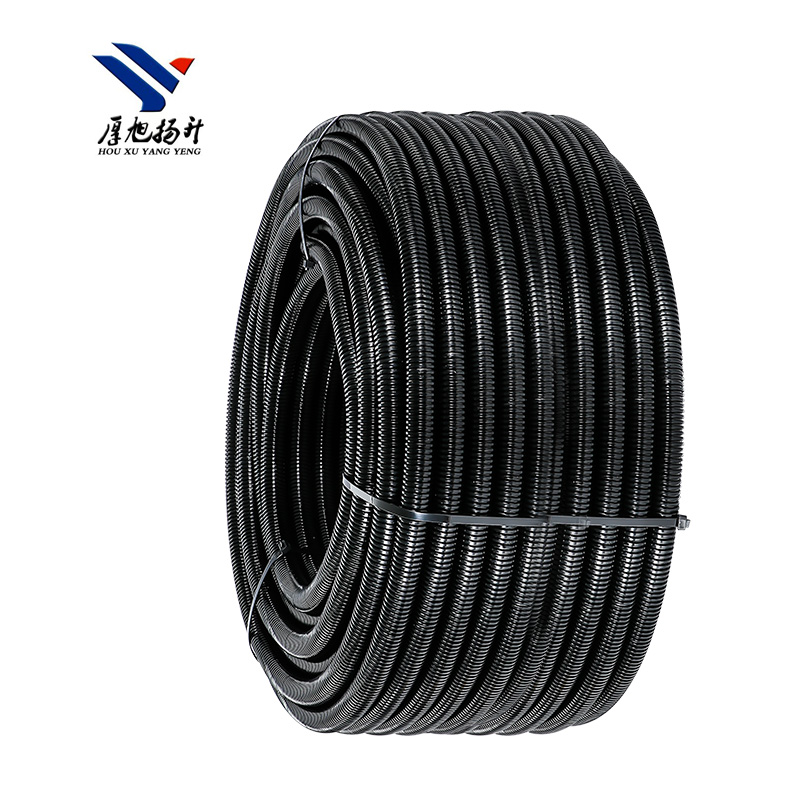
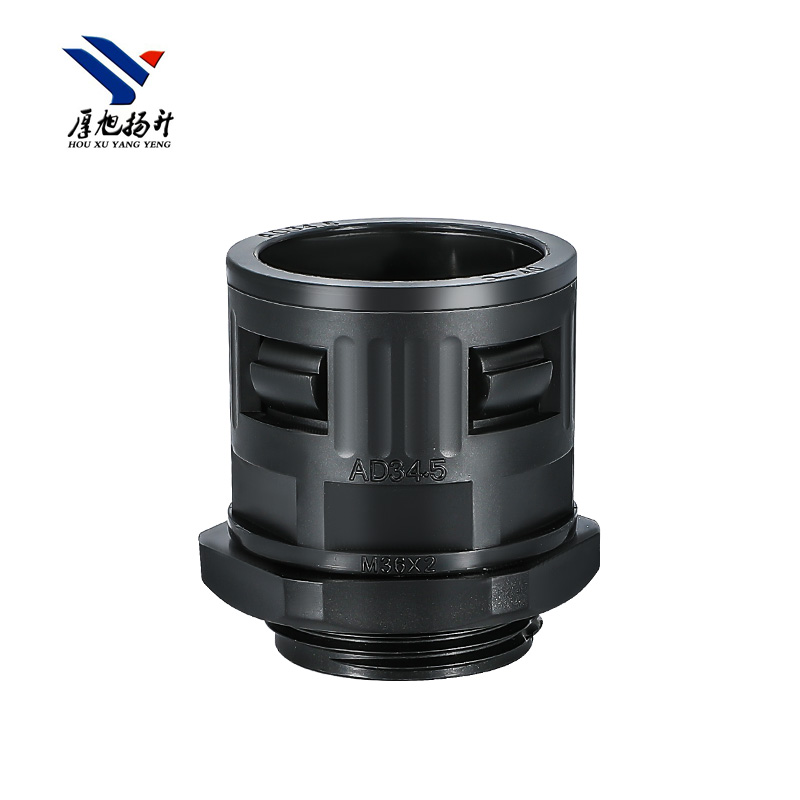
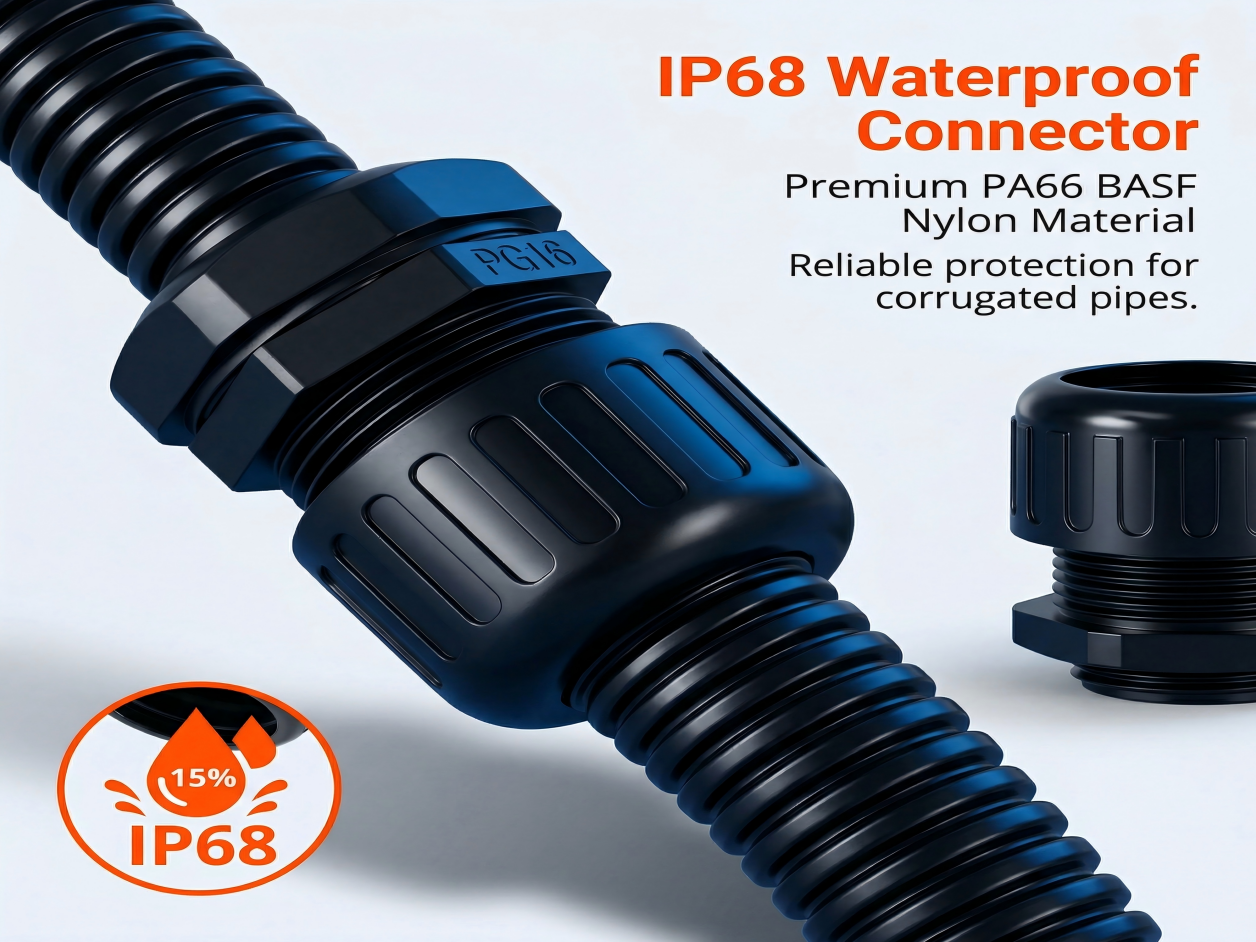
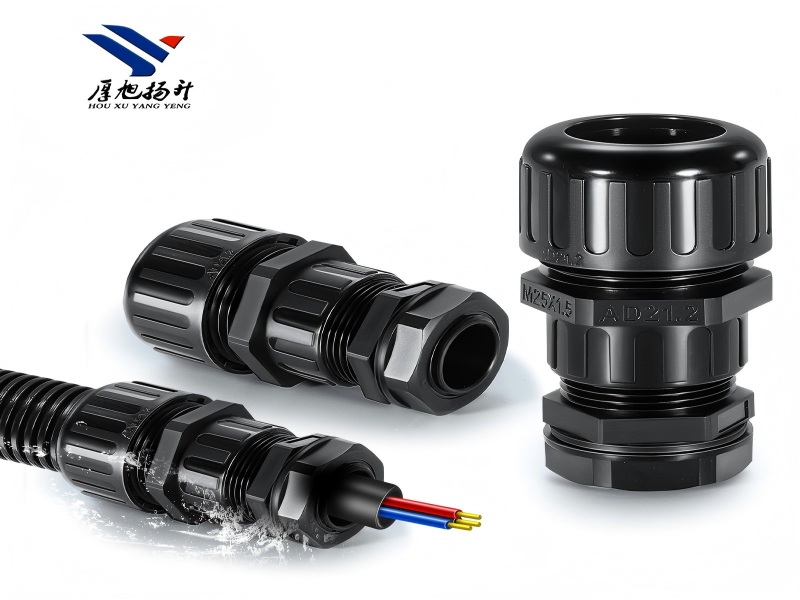
Zhejiang Houxu Yangsheng Connector Co., Ltd., a Wenzhou-based manufacturer of plastic corrugated conduits and connectors, has announced the launch of its newly developed Dual-Lock Waterproof Connector – a product specifically engineered to address recurring customer complaints about connector loosening and pull-out failure in high-vibration environments.
While the company has not filed a patent for this design, the Dual-Lock connector represents extensive in-house research and development, multiple prototype iterations, and close collaboration with customers in the renewable energy and factory automation sectors. The result is a practical, field-tested solution now available for industrial automation, solar tracking systems, wind power equipment, rail transportation, and heavy machinery applications.
The Origin Story: When Customer Feedback Drives Innovation
The development of the Dual-Lock connector did not begin in an engineering lab. It began on customer sites, in factory maintenance logs, and through after-sales support tickets.
In late 2024, Houxu Yangsheng’s sales and technical support teams conducted a systematic review of customer inquiries and quality claims from the previous year. The goal was simple: identify the most common failure modes reported by end users. The findings were remarkably consistent across multiple industries and geographic markets.
Three problems dominated the feedback:
Problem 1: Loosening under vibration. Customers in solar farm installations reported that standard connectors on solar tracking systems would gradually work loose over time. This compromised waterproof seals, led to moisture ingress, and eventually caused electrical failures.
Problem 2: Pull-out during cable installation. Electricians and maintenance crews frequently complained that when pulling cables through installed conduits – a standard practice in most electrical installations – the pulling force would sometimes disconnect the conduit from the connector. This required the installer to stop work, reattach the conduit, and then resume pulling. In large projects with many connections, this added significant unproductive labor.
Problem 3: Time-consuming installation. Many existing “waterproof” connectors on the market required special tools or multiple adjustment steps. Some required tightening with pliers or wrenches to achieve the advertised IP rating. Others had small set screws that were easy to lose or difficult to align. Installers wanted a connector that could be hand-tightened reliably, without tools, in seconds rather than minutes.
“We could have ignored these complaints and kept selling our standard product line,” says the company’s lead engineer. “But when you hear the same three problems from customers across different markets – that is not an isolated issue. That is a gap in the market. So we decided to build the product that customers were asking for.”
---
Engineering the Solution: How the Dual-Lock Works
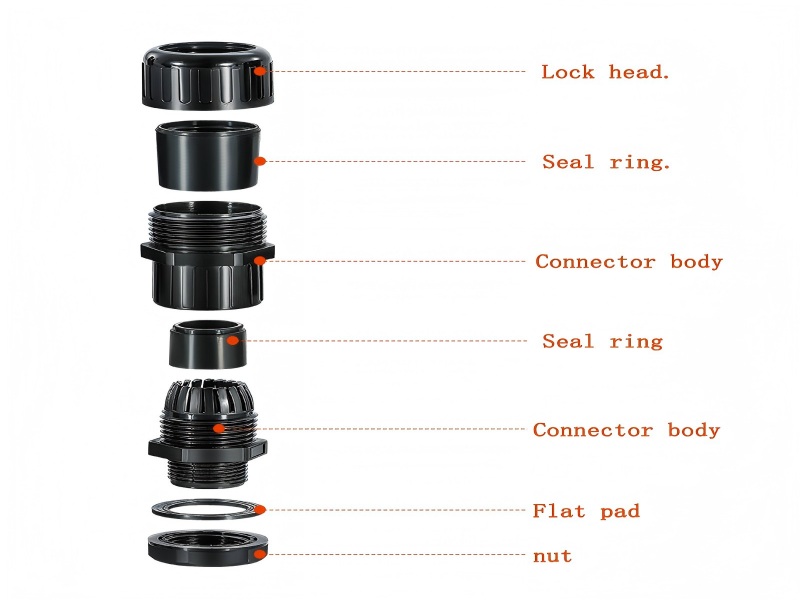
The Dual-Lock connector is not a minor modification of an existing design. It incorporates two independent locking mechanisms that work sequentially during installation to secure the conduit. Understanding how these two stages function is key to appreciating the product’s value.
Stage 1 – Primary Compression Lock
The installation process begins by inserting the corrugated conduit into the connector body until it seats against an internal stop. The installer then hand-tightens the external locking cap.
Inside the cap, a precision-machined beveled surface contacts the top of the connector body. As the cap turns, this bevel forces the body’s flexible gripping fingers to compress inward around the conduit’s corrugations. This creates the first level of holding force – sufficient for most static applications where vibration is minimal.
What makes this stage different from standard connectors is the optimized geometry of the gripping fingers. Houxu Yangsheng’s engineering team carefully designed the finger width, taper angle, and material thickness to maximize grip without causing excessive stress that could lead to long-term material fatigue.
Stage 2 – Secondary Mechanical Lock
The second stage engages as the installer continues turning the cap beyond the initial compression point. A floating locking sleeve inside the assembly begins to move upward against multiple locking blocks arranged around the conduit.
These locking blocks are designed with angled surfaces. As the sleeve moves upward, it presses these blocks inward against the conduit’s corrugations. Unlike the primary compression lock – which relies on material deformation that could theoretically relax over time – the secondary mechanical lock uses rigid interference. Even if the primary compression loses some force after years of thermal cycling, the secondary lock remains engaged.
The Installation Experience
From the installer’s perspective, the Dual-Lock feels different from a standard connector. There is an initial resistance as the primary compression engages, followed by a distinct tactile indication as the secondary lock activates. This feedback tells the installer that both stages are engaged – without needing to measure torque or use special tools.
“We designed the installation feel deliberately,” explains the product manager. “Electricians do not want to guess whether a connector is properly tightened. The Dual-Lock gives them clear physical feedback. When they feel that second stage engage, they know the connection is secure.”
---
Testing and Validation
Before releasing the Dual-Lock connector for production, Houxu Yangsheng’s engineering team conducted extensive in-house testing to validate performance against the company’s standard connector. The testing program involved multiple sample units across various sizes.
Vibration Resistance Testing
Samples were mounted on an industrial shaker table programmed to sweep across a range of frequencies, simulating real-world vibration conditions found in applications such as diesel generators, construction equipment, and solar trackers. The Dual-Lock connector showed no measurable loosening after extended testing, while standard connectors tested under identical conditions showed visible loosening that in some cases compromised the waterproof seal.
Pull-Out Force Testing
Using a calibrated force gauge, the engineering team measured the tensile force required to separate the conduit from the connector. The Dual-Lock connector withstood pull-out forces significantly higher than the standard connector – far beyond any reasonable pulling load encountered during cable installation.
Waterproof Integrity Testing
Assembled units were fully submerged in a water tank for extended periods to verify waterproof performance. Samples were removed, inspected for water ingress, and then reinstalled on the shaker table for additional vibration testing.
The Dual-Lock maintained IP68 rating throughout the full test sequence. Standard connectors that were pre-loosened showed visible water ingress.
“We wanted hard data, not marketing claims,” notes the quality control manager. “The Dual-Lock consistently outperformed our standard connector in every test category. For customers who have experienced field failures, this data gives them confidence to switch.”
---
Material Selection: PA6 with UV Stabilization
The Dual-Lock connector is molded from high-grade PA6 nylon, selected for its mechanical strength and environmental durability. Key material properties include:
· Wide temperature range suitable for both indoor and outdoor applications
· UV stabilization for long-term exposure to sunlight
· Chemical resistance to oils, greases, and dilute acids
· Flame-retardant rating meeting industry standards
For customers requiring different material properties, the company offers customization options including PVC, PE, or enhanced flame-retardant grades upon request.
---
Specifications and Availability
The Dual-Lock waterproof connector is available immediately in a range of thread sizes, compatible with conduit diameters from AD10.0 to AD54.5mm – covering applications from small cable entries to high-power systems.
All units include an integrated sealing ring and are supplied with installation instructions. Optional accessories such as locknuts and sealing washers are available upon request.
---
A Pragmatic Approach: No Patent, Focus on Delivery
When asked why the company chose not to file a patent for the Dual-Lock design, the management team offers a practical response: “Patent applications take considerable time to process. Our customers need a solution now, not years from now. We decided to focus our resources on tooling, production, and quality control – getting a reliable product into our customers’ hands quickly.”
This decision reflects the company’s pragmatic engineering culture. Rather than waiting for legal protections, Houxu Yangsheng is betting that product quality, customer service, and factory-direct pricing will retain customer loyalty – even if competitors eventually copy the design.
---
Customer Pre-Orders and Initial Feedback
The Dual-Lock connector was offered to select existing customers as a pre-production trial. One distributor in Southeast Asia, who specializes in solar farm installations, ordered significant quantities after testing samples:
“Vibration loosening has been a constant headache on our solar tracker systems. We tested the Dual-Lock connector on multiple active trackers. Not a single unit came loose. We placed our first container order immediately.”
Another customer – a factory automation integrator in Germany – commented: “Installation is noticeably faster. Our electricians can hand-tighten the Dual-Lock in about half the time required for our previous connector brand. That saves us real money on labor.”
---
How to Request Samples or Place Orders
The Dual-Lock waterproof connector is now in full production. Customers may request samples for testing by contacting the sales team. Free samples are available for standard sizes; customers pay only shipping costs.
For volume orders, the company offers:
· Factory-direct pricing with no middleman markups
· Flexible MOQ options for standard sizes
· Custom packaging available (branded boxes, retail-ready displays)
· CE and RoHS certification documentation included
---
About Zhejiang Houxu Yangsheng Connector Co., Ltd.
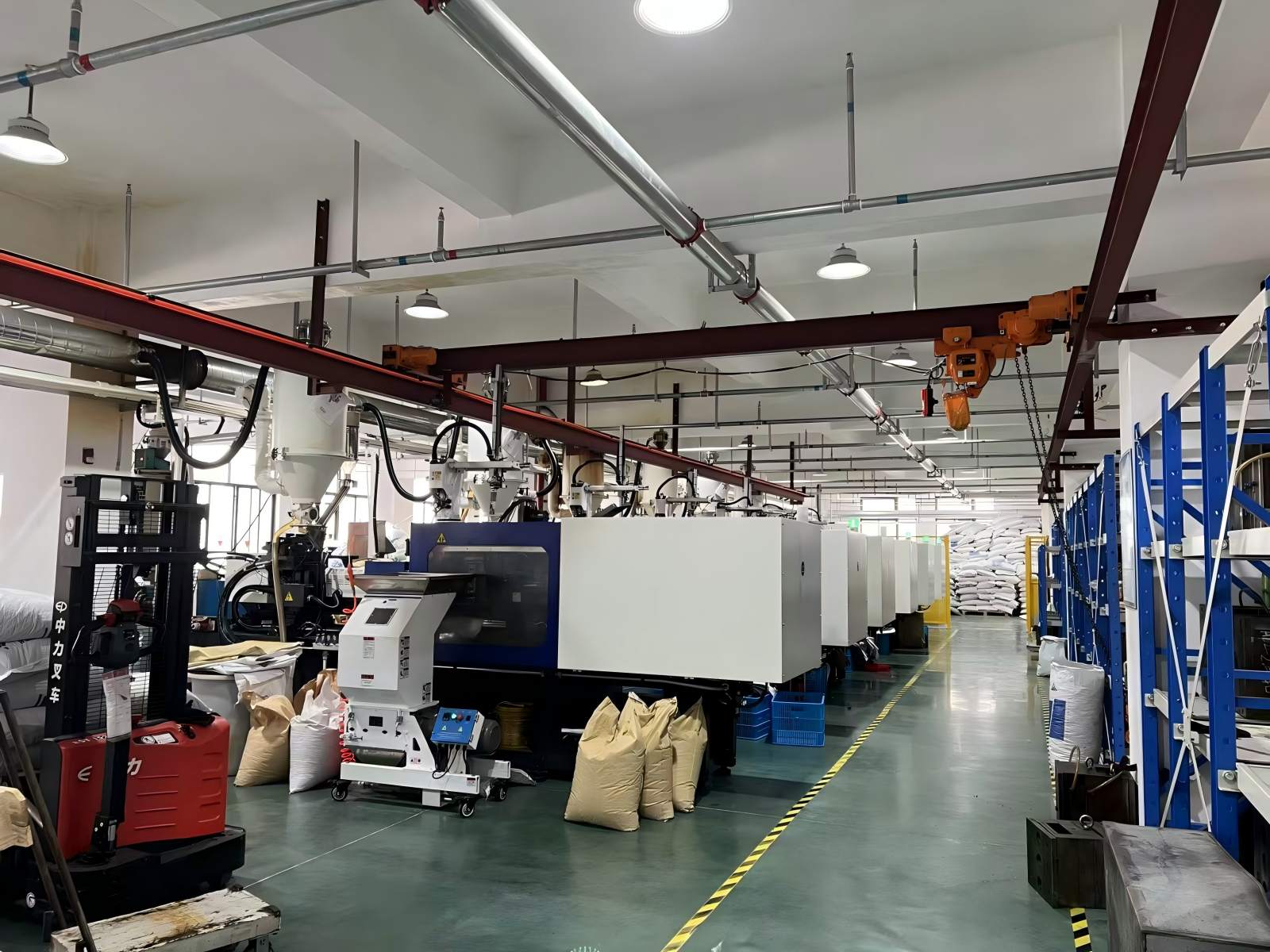
Founded in 2016 and based in Yueqing, Wenzhou – the “Electrical Capital of China” – Zhejiang Houxu Yangsheng Connector Co., Ltd. specializes in the R&D, production, and sales of plastic corrugated conduits and connectors. The company operates a fully integrated factory with monthly capacity exceeding 1.08 million meters of conduit and 5 million sets of connectors. Products are exported to Europe, North America, Southeast Asia, and the Middle East, supported by CE, RoHS, and ISO9001 certifications.
For more information about the Dual-Lock waterproof connector, visit topsolithos.com or email [email protected].