 EN
EN
Can Conduits Fittings Extend Service Life?
An automotive parts manufacturer in Stuttgart operating a 24-station automated assembly line experienced an unexplained conveyor motor failure that shut down the entire line. The troubleshooting process — occupying two electrical engineers for 17 hours across two shifts — traced the failure to a single missing cable gland on a conduit entry point at a motor junction box. Without the gland, the conduits fittings at that entry point were incomplete: the conduit terminated against the junction box wall, leaving a 3mm annular gap between the conduit exterior and the box entry hole. Over approximately 11 months of operation, coolant mist from a nearby machining center was drawn into the conduit through the gap by the thermal pumping effect — the daily heating and cooling cycle of the motor causing the air inside the conduit to expand and contract, pulling ambient air (and suspended coolant droplets) inward through any available opening. The coolant traveled approximately 8 meters inside the conduits fittings network, condensed on the motor's terminal block, caused copper corrosion that increased contact resistance at the terminal screws, generated localized heating, and eventually melted the terminal block insulation. The replacement cost of the motor terminal block, conduit, and labor totaled approximately 2,400 euros. The missing cable gland that would have prevented the entire failure cost 1.80 euros.
Conduits fittings extend wiring system service life by preventing the three primary failure mechanisms that degrade cables in industrial environments: water and dust ingress, mechanical abrasion at entry points, and vibration-induced conductor fatigue. The fittings — cable glands, waterproof connectors, and anti-bending glands — are not accessories to the conduit; they are the components that determine whether the cable protection system actually protects the cables.
The Three Failure Mechanisms
Water and dust ingress is the most common cause of premature cable failure in industrial wiring systems. When conduits fittings at enclosure entry points are missing, incorrectly sized, or improperly installed, the resulting gaps allow moisture, dust, oil mist, and chemical vapors to enter the conduit. Once inside, condensation cycles — driven by temperature changes as equipment operates and cools — distribute moisture along the entire length of the conduit. The water corrodes copper conductors at terminal points, increases contact resistance, generates heat, and accelerates insulation degradation through hydrolysis (water reacting with PVC insulation to produce hydrochloric acid, which further attacks the copper).
Mechanical abrasion occurs at every point where a cable passes through a metal enclosure wall. The edge of a punched or drilled hole in a sheet metal enclosure is sharp — burrs from the manufacturing process create a knife-edge that can cut through cable insulation within weeks of vibration exposure. A properly installed nylon cable gland or waterproof conduits fittings connector provides a smooth, radiused entry surface — typically with a minimum bend radius of 4-5 times the cable diameter — that prevents the cable jacket from contacting the sharp enclosure edge.
Vibration-induced conductor fatigue is the most insidious failure mode because it develops invisibly over months or years. Cables connected to motors, pumps, conveyors, and robotic actuators experience continuous low-amplitude vibration transmitted through the equipment mounting structure. At the point where the cable exits the conduit and enters the equipment enclosure, the cable transitions from being supported (inside the conduit) to being unsupported (the free length between the conduit end and the terminal block). This transition point becomes a stress concentration where each vibration cycle bends the copper conductors through a microscopic angle. Copper has a finite fatigue life — after approximately 10 million to 100 million cycles at low strain amplitude, micro-cracks initiate and propagate, eventually causing conductor breakage. Flexible conduits fittings — particularly anti-bending cable glands with an integrated spiral strain relief — absorb vibration through elastic deformation of the spiral element, decoupling the cable's supported and unsupported sections and reducing the strain amplitude at the conductor level by 60-80%.
The Critical Fittings
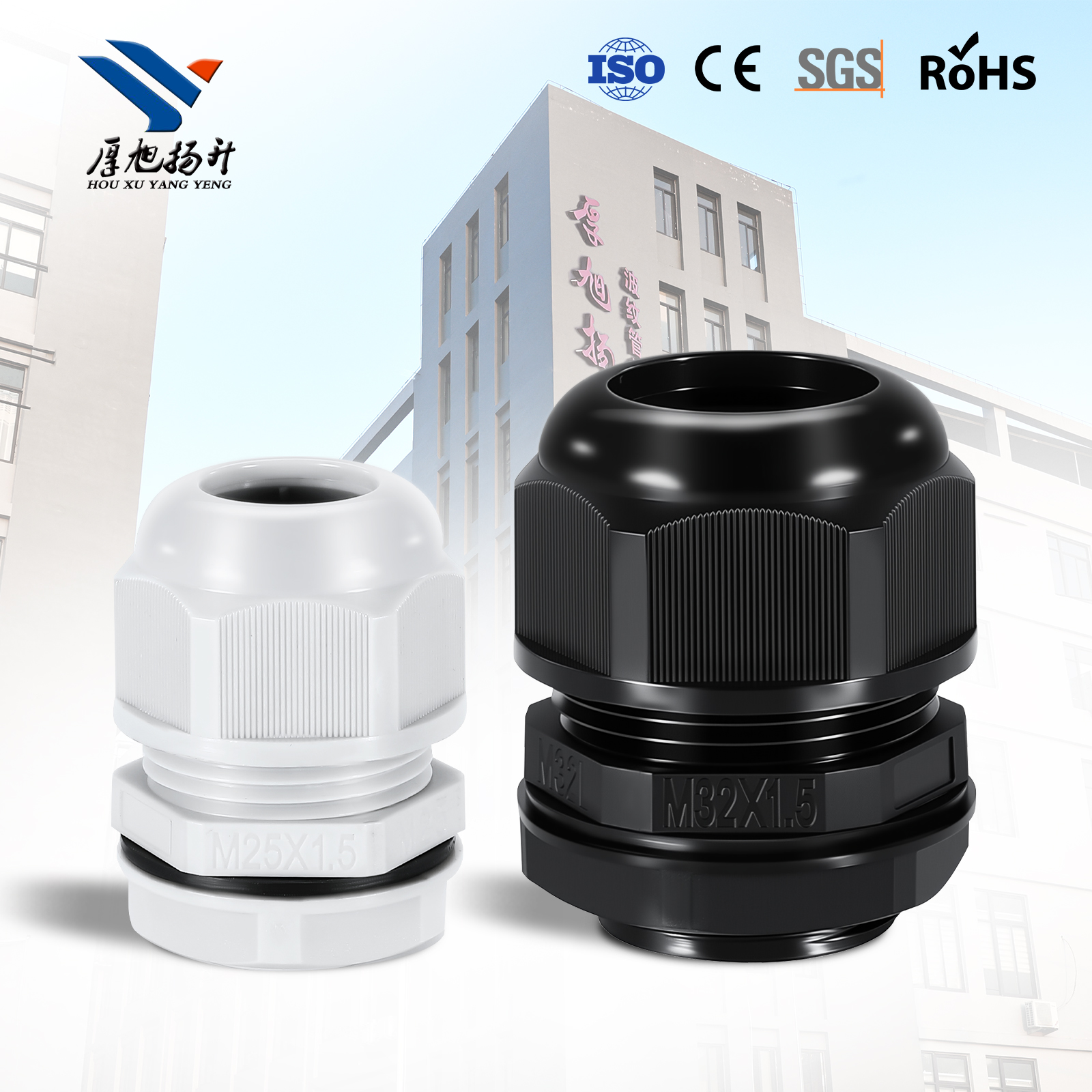
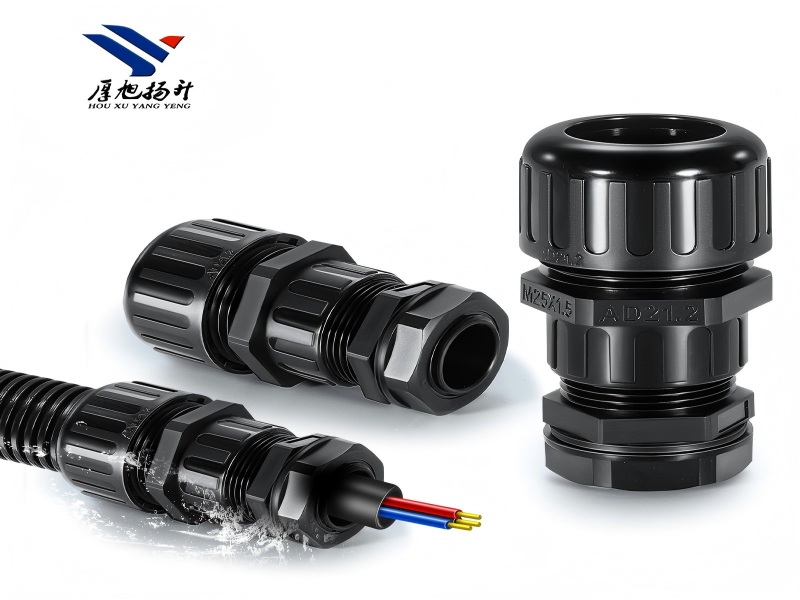
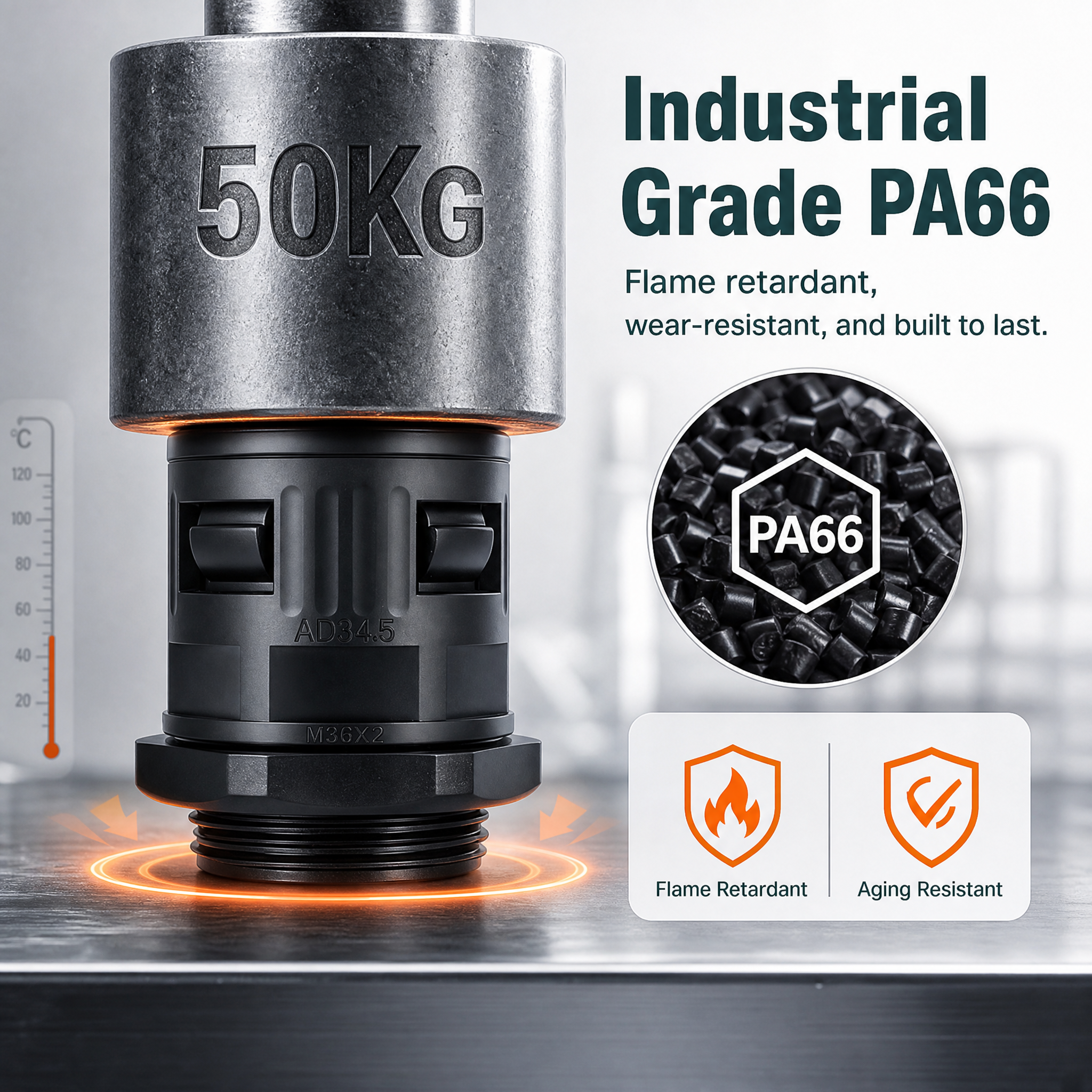
Cable glands are the first line of defense. A correctly specified nylon (PA66) or metal (brass, stainless steel) cable gland provides four functions simultaneously: it seals the cable entry against dust and water (IP68 rating achievable with an internal sealing gasket); it provides strain relief by clamping the cable outer jacket, transferring any pulling force on the external cable to the enclosure wall rather than to the internal terminal connections; it electrically bonds the cable armor or braid to the enclosure for EMC (electromagnetic compatibility) continuity; and it provides the smooth entry radius that prevents jacket abrasion.
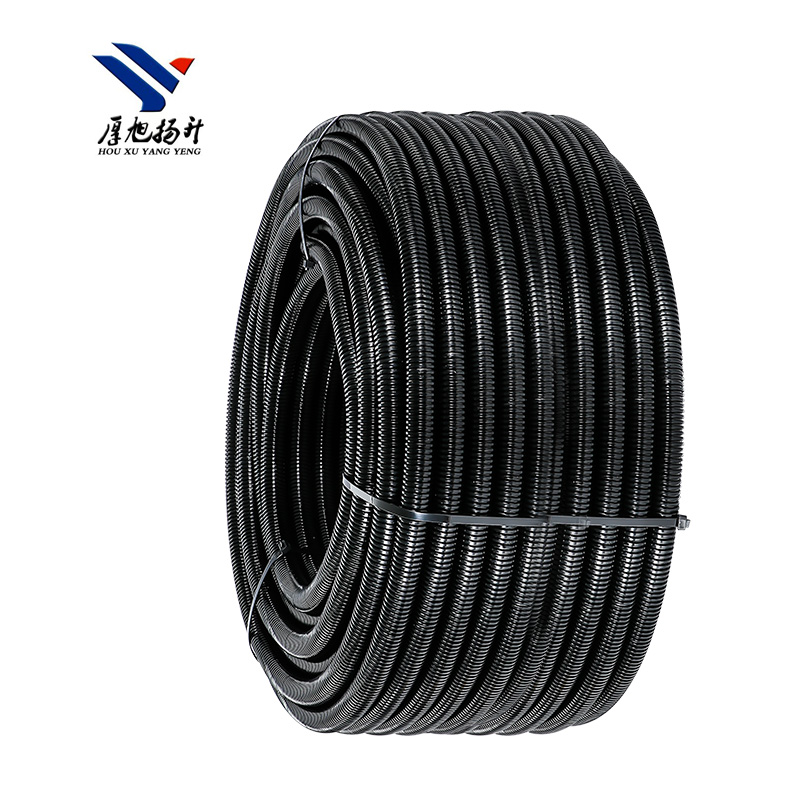
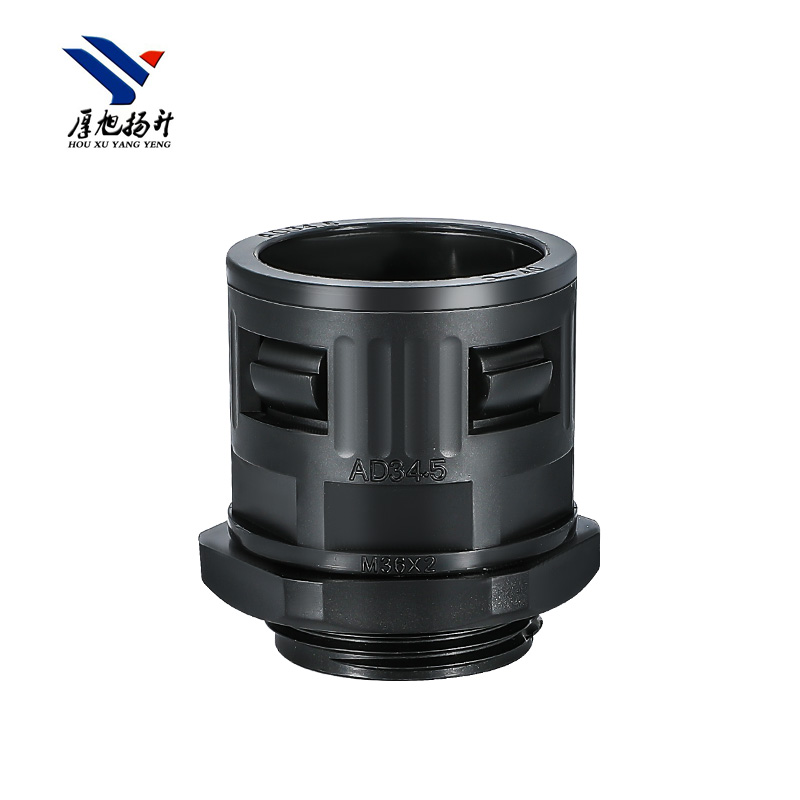
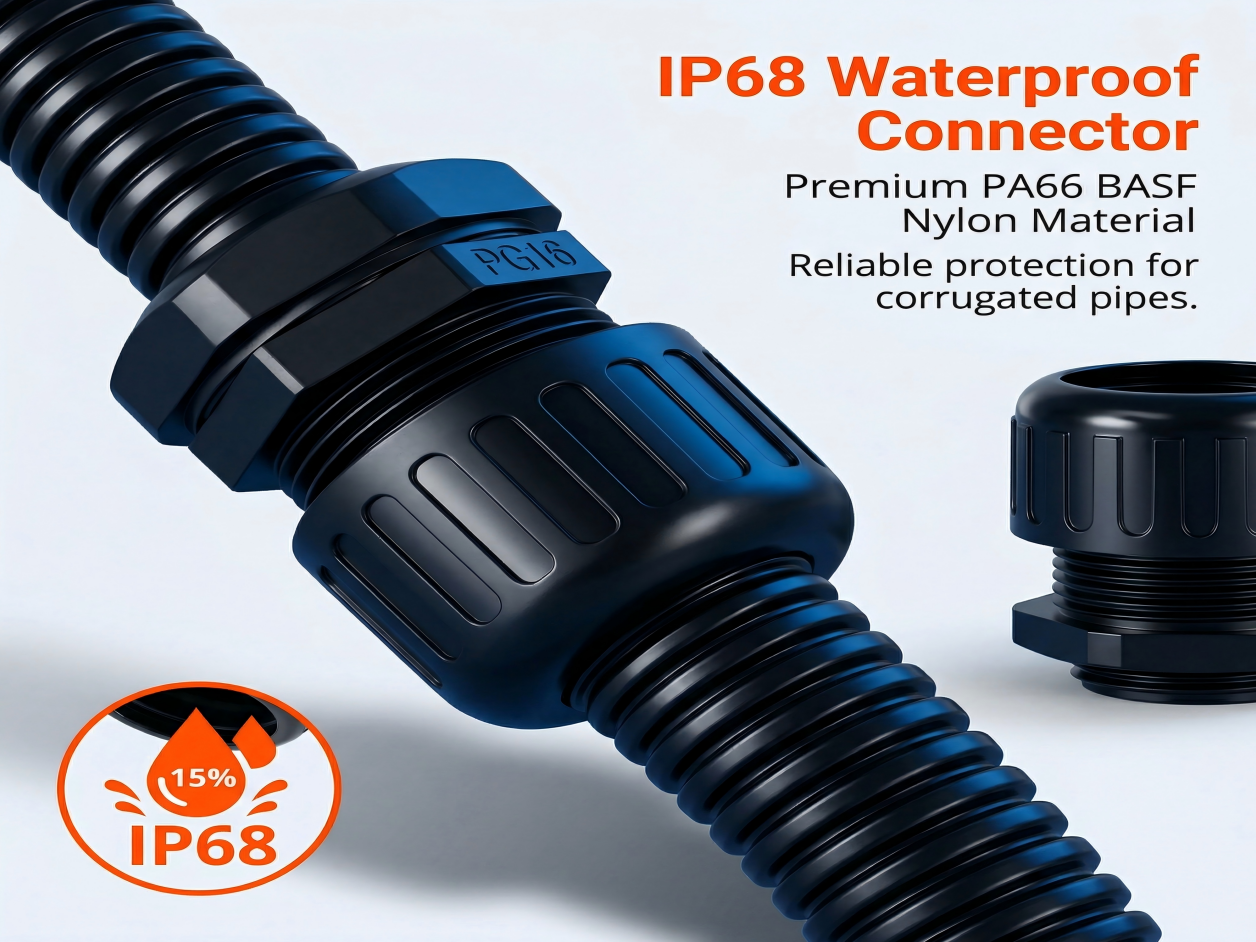
Waterproof conduits fittings connectors — specifically the IP68-rated straight and elbow connectors that interface between corrugated conduit and equipment enclosures — seal the conduit-to-enclosure junction. These connectors feature an internal O-ring or gasket that seats into the conduit's corrugation valley and a threaded body with a locknut that secures the connector to the enclosure wall. The connection is watertight to IP68 standards when the gasket is properly compressed, preventing the exact scenario that caused the Stuttgart factory failure.
Anti-bending cable glands address the vibration failure mode by incorporating a flexible spiral strain relief element — typically a tapered helical spring or a slotted flexible boot — that extends 30-50mm beyond the gland body. The spiral element distributes bending stress over a longer section of cable, reducing the peak curvature at any single point and increasing the fatigue life of the copper conductors by a factor of 3-5 compared to an unsupported cable exit.
Selection for Maximum Service Life
For industrial conduits fittings applications where service life extension is the primary goal, select cable glands with IP68 rating, PA66 or metal body material (matched to the enclosure material to avoid galvanic corrosion), and an operating temperature range that covers the installation's worst-case ambient. At every conduit-to-enclosure junction, a waterproof straight or elbow connector must be installed — no conduit should terminate against an enclosure wall without a sealing connector. Anti-bending glands should be specified for every cable exit that is subject to vibration from motors, pumps, or moving machinery. The incremental cost of upgrading from a basic open-entry fitting to a sealed, strain-relieved, anti-bending system is typically 5-15 euros per connection point — an investment that prevents failures costing hundreds to thousands of euros in downtime and replacement.
Frequently Asked Questions
What is the difference between a cable gland and a conduit connector?
A cable gland seals a single cable entering an enclosure, clamping the cable jacket for strain relief and sealing against the cable's smooth outer surface. A conduit connector joins corrugated conduit to an enclosure, sealing against the conduit's corrugated profile using a gasket that fills the corrugation valley. Both serve the same protective function but interface with different geometries.
Can missing or loose conduit fittings really cause cable failure?
The Stuttgart case documents coolant traveling 8 meters inside a conduit through a 3mm gap at a missing gland, causing terminal corrosion and motor failure. Small gaps create a thermal pumping effect — daily temperature cycles draw ambient air and contaminants into the conduit through any opening — distributing moisture and chemicals along the entire cable length.
How does an anti-bending gland extend cable service life?
An anti-bending gland incorporates a spiral strain relief element that distributes bending stress over 30-50mm of cable length instead of concentrating it at a single point. This reduces peak curvature and strain amplitude at the copper conductors by 60-80%, increasing fatigue life by a factor of 3-5. The element also absorbs vibration transmitted from the equipment, decoupling the cable from the vibration source.
What IP rating is needed for outdoor conduit fittings?
IP65 (water jet resistant) is the minimum for outdoor installations protected from direct rain. IP67 (temporary immersion) is recommended for ground-level installations subject to standing water. IP68 (continuous immersion) is required for underground, marine, and wastewater applications. The connector's gasket material must be rated for the installation's temperature and chemical exposure.
Should conduit fittings be nylon or metal?
Nylon (PA66) fittings are suitable for most industrial applications — they are lighter, corrosion-free, electrically insulating, and 30-50% lower cost than metal. Metal fittings (brass, stainless steel, zinc alloy) are required where mechanical impact resistance is critical, where EMC bonding through the fitting is needed, or where operating temperatures exceed 125°C (nylon's continuous limit).
How often should conduit fittings be inspected in service?
Industrial installations should be visually inspected quarterly: check for cracked or discolored nylon bodies (indicating UV or thermal degradation), loose compression nuts (hand-tighten if rotation is detected), and signs of water staining or corrosion around the fitting entry. Semi-annual torque verification with a calibrated wrench is recommended for metal fittings in high-vibration environments.