 EN
EN
How to Select Corrugated Conduit for Harsh Environments?
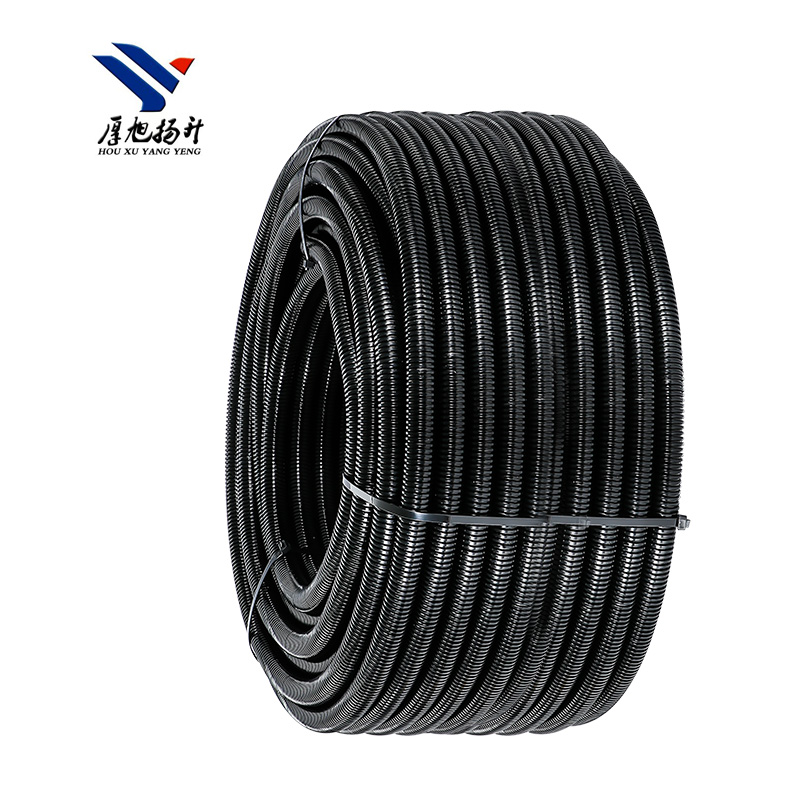
The maintenance team at an offshore wind farm in the North Sea replaced 2,400 meters of PE (polyethylene) corrugated conduit protecting the turbine nacelle sensor cables approximately 14 months after commissioning. The conduit — specified during construction based on lowest installed cost — exhibited three simultaneous failure modes: UV degradation had caused the outer surface to chalk and micro-crack after 14 months of continuous North Sea sunlight exposure (amplified by reflection from the water surface); salt spray had penetrated through the cracks and corroded the aluminum cable shielding inside the conduit; and the daily temperature cycling from -5°C at night to 40°C inside the nacelle during daytime operation had embrittled the PE to the point where conduit sections fractured during routine maintenance when technicians moved cable bundles to access sensors. The replacement corrugated conduit specified: PA66 nylon rated for -40°C to +125°C continuous, UL94 V-0 flame retardant, UV-stabilized with carbon black additive, and IP68-rated connectors at every joint. The replacement installation cost exceeded the original by 40%, but zero conduit failures were recorded in the following 36 months of operation.
Selecting corrugated conduit for harsh environments requires evaluating five parameters — material, temperature range, ingress protection, UV stability, and flame retardant class — because the interaction between these parameters, not any single one, determines whether the conduit will fail in 14 months or last 15 years.
Material Type — The Foundation Decision
The three common materials for corrugated conduit — PA66 (nylon), PP (polypropylene), and PE (polyethylene) — form a clear hierarchy of harsh-environment capability.
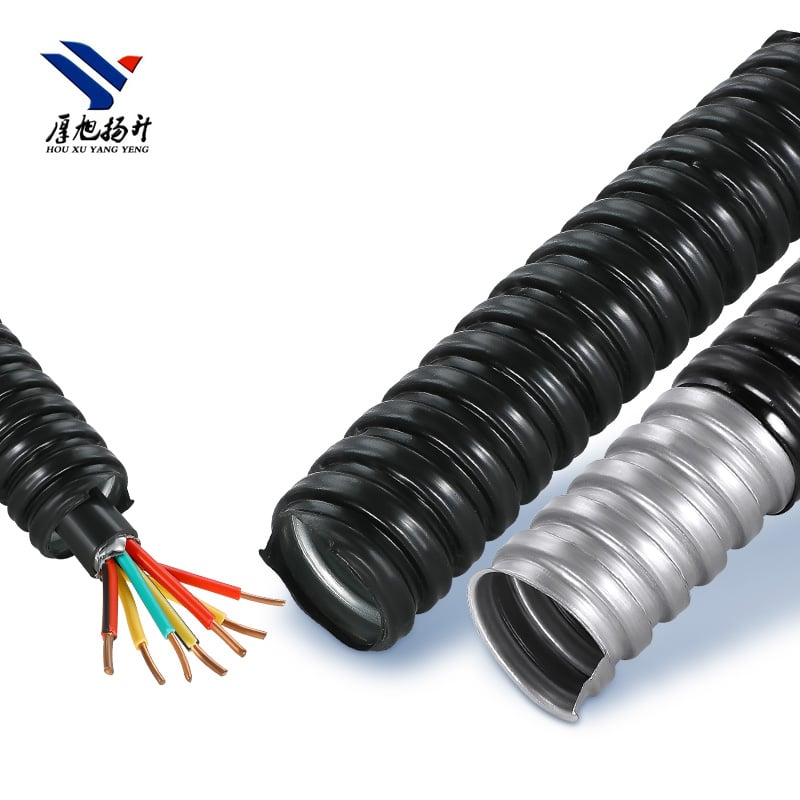
PA66 corrugated conduit, manufactured from 100% virgin BASF-grade nylon resin, provides the highest mechanical strength (tensile strength 60-80 MPa versus 20-35 MPa for PE), the widest operating temperature range (-40°C to 125°C continuous, 150°C short-term), and inherent flame resistance (UL94 V-0 achievable with halogen-free additives). The nylon molecular structure — with amide groups along the polymer backbone that form strong hydrogen bonds between adjacent chains — gives PA66 its characteristic combination of toughness and thermal stability. The corrugated profile of PA66 corrugated conduit — alternating ridges and valleys along the tube — provides 360-degree flexibility without kinking, allowing the conduit to be routed through tight bends without collapsing the internal diameter, which would pinch cables and create hotspots.
PP corrugated conduit operates in a narrower temperature range (-20°C to 100°C) and lacks the inherent flame retardant properties of PA66 — standard PP achieves only HB or V-2 flammability rating. PP's advantage is chemical resistance to strong acids and alkalis, making it suitable for chemical plant environments where acid mist exposure would degrade PA66. However, PP embrittles at sub-zero temperatures, making it unsuitable for outdoor installations in cold climates.
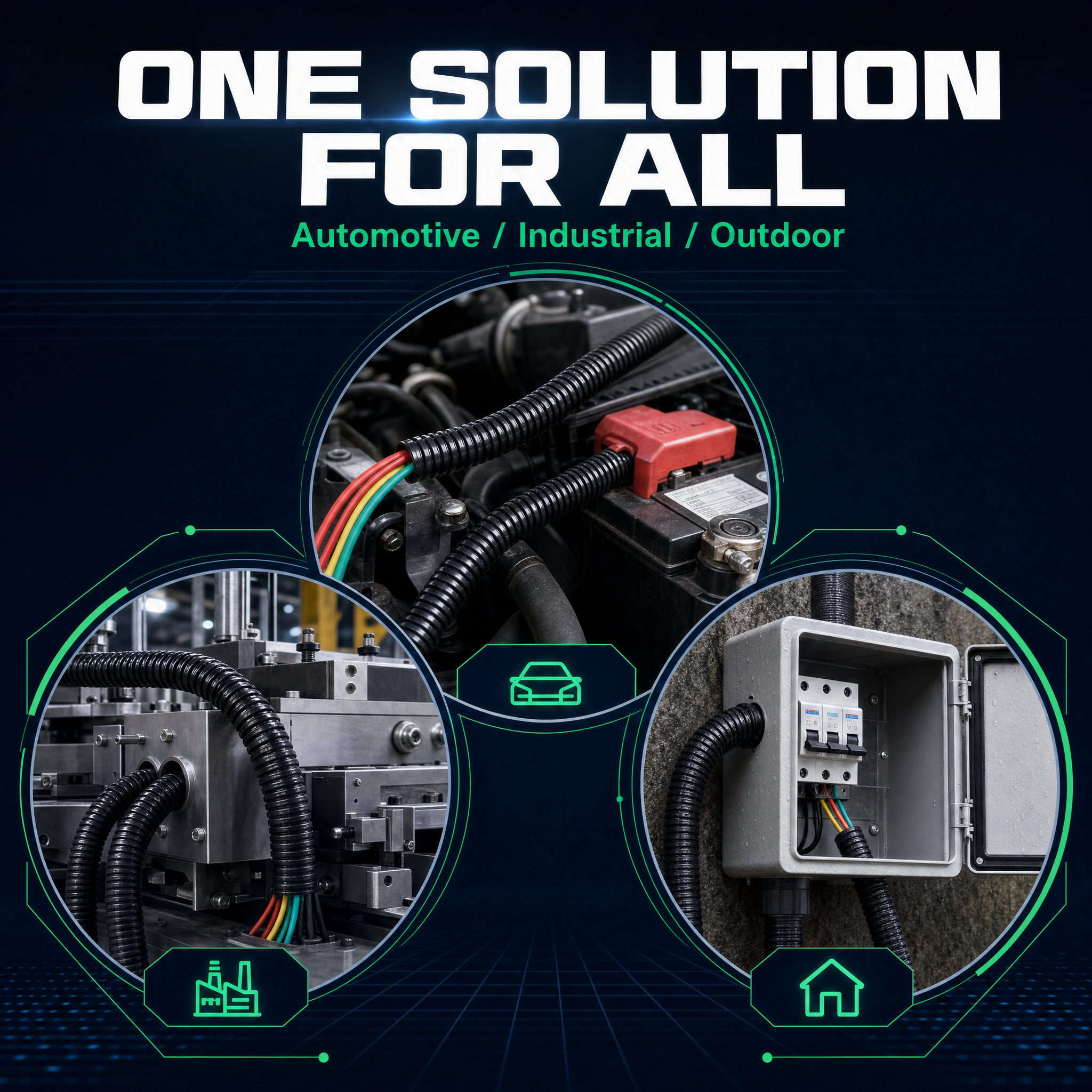
PE corrugated conduit — the lowest-cost option — operates from -20°C to 90°C (110°C short-term), provides excellent flexibility at room temperature, and offers good chemical resistance. PE's critical limitation is UV stability: without carbon black additive (2-2.5% by weight), PE degrades rapidly under sunlight exposure, losing 50% of its tensile strength within 6-12 months of continuous outdoor exposure. Even with UV stabilization, PE lacks the mechanical robustness and flame resistance required for harsh industrial environments, making it suitable for indoor, temperature-controlled applications only.
Temperature Range — The Service Life Determinant
Temperature range is the single parameter that most directly determines corrugated conduit service life in harsh environments. The failure mechanism is thermal-oxidative degradation: at elevated temperatures, oxygen attacks the polymer chains, breaking them into shorter segments and reducing mechanical strength. The rate of this degradation approximately doubles for every 10°C increase in operating temperature (Arrhenius relationship). A PA66 conduit operating at 80°C will degrade roughly 4 times faster than the same material at 60°C.
In cold environments, the failure mechanism is embrittlement. Polymers have a glass transition temperature below which they transition from ductile (flexible, able to absorb impact) to brittle (stiff, cracking under stress). PA66 has a glass transition temperature of approximately 55°C but remains ductile well below 0°C due to its semi-crystalline structure; PP becomes brittle below approximately 0°C; PE embrittles below -20°C. For outdoor installations in cold climates, PA66 corrugated conduit is the only option that maintains installation flexibility at sub-zero temperatures.
IP Rating and Sealing
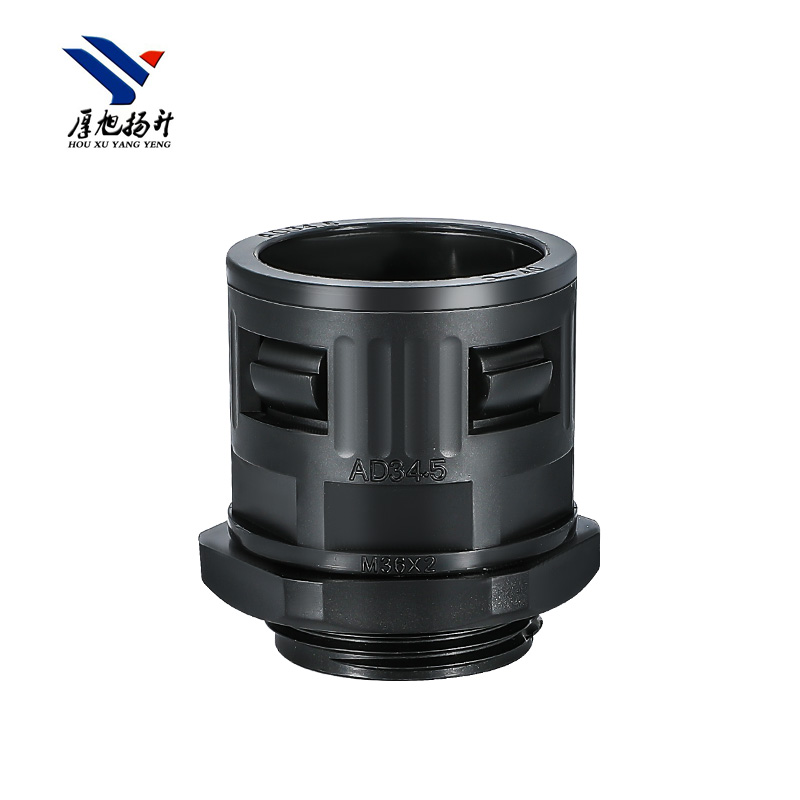
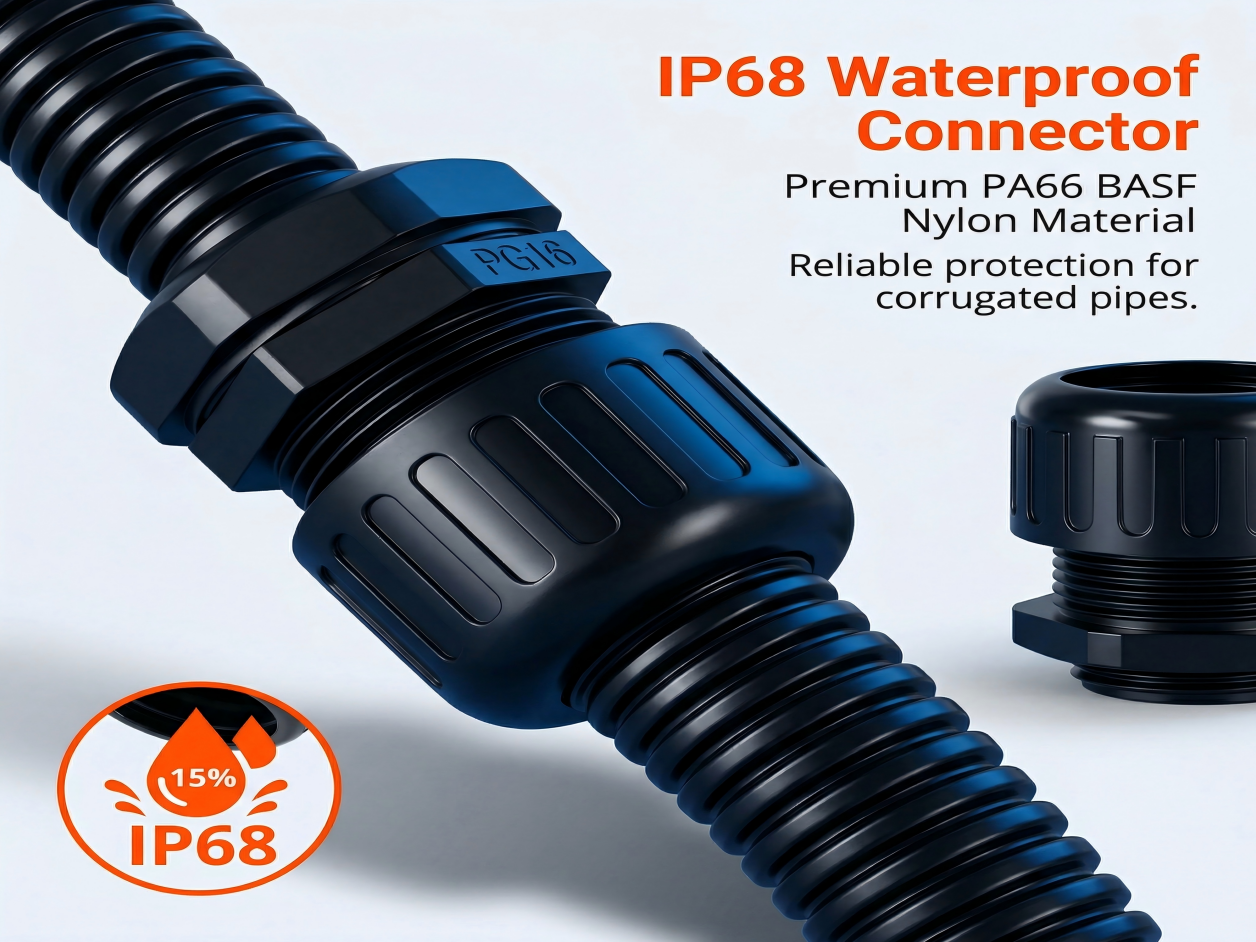
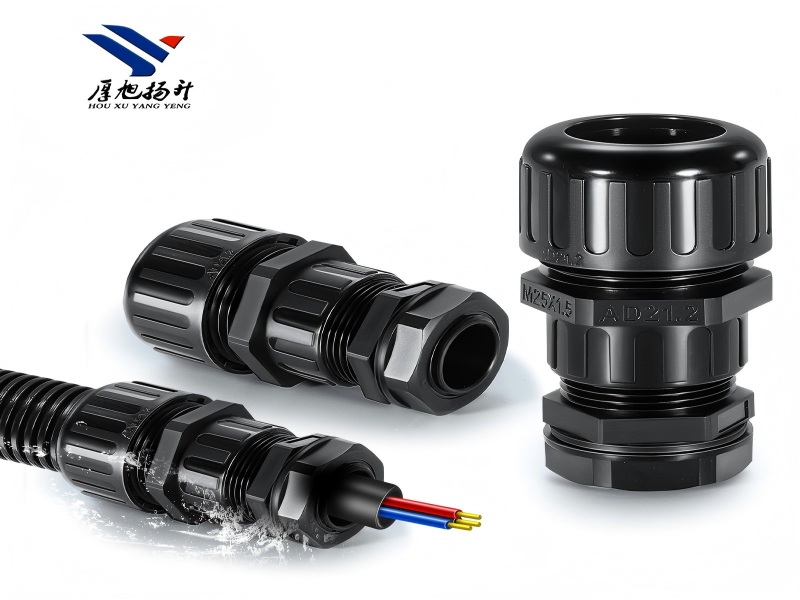
The corrugated structure of flexible conduit creates a fundamental sealing challenge: the exterior surface is not smooth but consists of alternating ridges and valleys, making it impossible to achieve a watertight seal with a simple compression fitting. IP68-rated connectors designed specifically for corrugated conduit solve this through a multi-component sealing system: an internal O-ring or gasket that seats into the conduit's corrugation valley, an external compression nut that applies axial force to compress the gasket into the valley, and a threaded body that connects to the equipment enclosure. The IP68 rating — tested at 1 meter water depth for 30 minutes with no ingress — is achieved when the connector's gasket material (typically NBR or silicone rubber) deforms sufficiently to fill the corrugation geometry under the compression force applied by the tightening nut.
For applications with intermittent water exposure — outdoor electrical enclosures, vehicle underbody wiring — IP65 or IP67 connectors may be sufficient. For submerged or continuously wet applications — marine, mining, wastewater treatment — IP68 is the minimum acceptable rating.
Selection Guidance
For harsh environment corrugated conduit selection, the priority order should be: identify the most extreme condition (not the average — the 1% worst case) for temperature, chemical exposure, and water exposure; select the material that survives the worst-case combination (typically PA66 for most industrial outdoor applications); specify the connector IP rating based on the water exposure scenario; confirm UV stabilization for outdoor use; and verify flame retardant certification if the installation is inside an electrical enclosure or occupied building.
Frequently Asked Questions
What is the most durable corrugated conduit material for outdoor use?
PA66 nylon with UV stabilization (carbon black 2-2.5%) and UL94 V-0 flame retardant additives provides the highest outdoor durability — operating from -40°C to +125°C continuous with 15+ years of service life in UV-exposed, weather-cycled environments. Standard PE fails under UV within 12-24 months; PP fails in sub-zero temperatures.
Can corrugated conduit be completely waterproof?
Yes, when used with IP68-rated connectors that seal into the conduit's corrugation valleys. The connector's internal gasket (NBR or silicone) deforms under compression to fill the corrugated geometry. A properly assembled PA66 corrugated conduit with IP68 connectors can withstand continuous immersion at 1 meter depth without water ingress into the cable chamber.
How does UV radiation damage corrugated conduit?
UV photons (290-400nm wavelength) break polymer chain bonds through photodegradation, causing surface chalking, micro-cracking, and progressive loss of tensile strength. PE without UV stabilizers loses 50% strength in 6-12 months of outdoor exposure. PA66 with carbon black absorbs UV energy and dissipates it as heat before it reaches the polymer chains, extending outdoor life to 10-15 years.
What temperature range does PA66 corrugated conduit support?
PA66 (nylon 66) corrugated conduit operates continuously from -40°C to +125°C with short-term tolerance (under 30 minutes) to +150°C. Below -40°C, the material becomes brittle and may crack during flexing. Above +125°C sustained, thermal-oxidative degradation accelerates, reducing mechanical strength over time.
When should PP or PE corrugated conduit be used instead of PA66?
PP is appropriate for indoor chemical plant environments where acid resistance is required and temperatures stay above 0°C. PE is suitable for indoor, temperature-controlled (0°C to 50°C), non-fire-critical applications where lowest cost is the primary driver. Neither should be used outdoors or in fire-rated enclosures.
How are IP68 connectors installed on corrugated conduit?
The connector slides over the conduit end, an internal gasket seats into a corrugation valley, and an external compression nut is hand-tightened then turned an additional quarter to half turn with a wrench. The compression deforms the gasket to fill the corrugation profile, creating the waterproof seal. Overtightening can strip the nylon threads or deform the conduit, reducing seal effectiveness.