
 EN

Why Use Split Wire Loom for Cable Protection?
As an electrical installation engineer, one of the first questions I get from panel builders and project managers is whether they really need to bother with cable protection products or whether the cable sheath alone is sufficient. For many applications — particularly panel wiring, industrial machinery, and wire harness assembly — the answer depends on what the cables will be exposed to over the course of their service life. That's where split wire loom earns its place in a wiring specification.
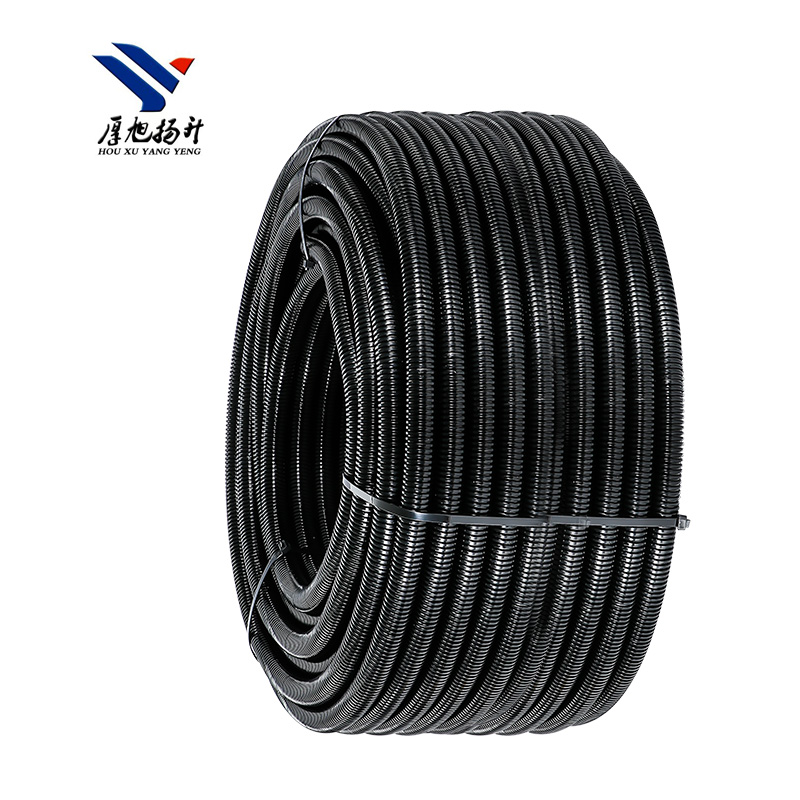
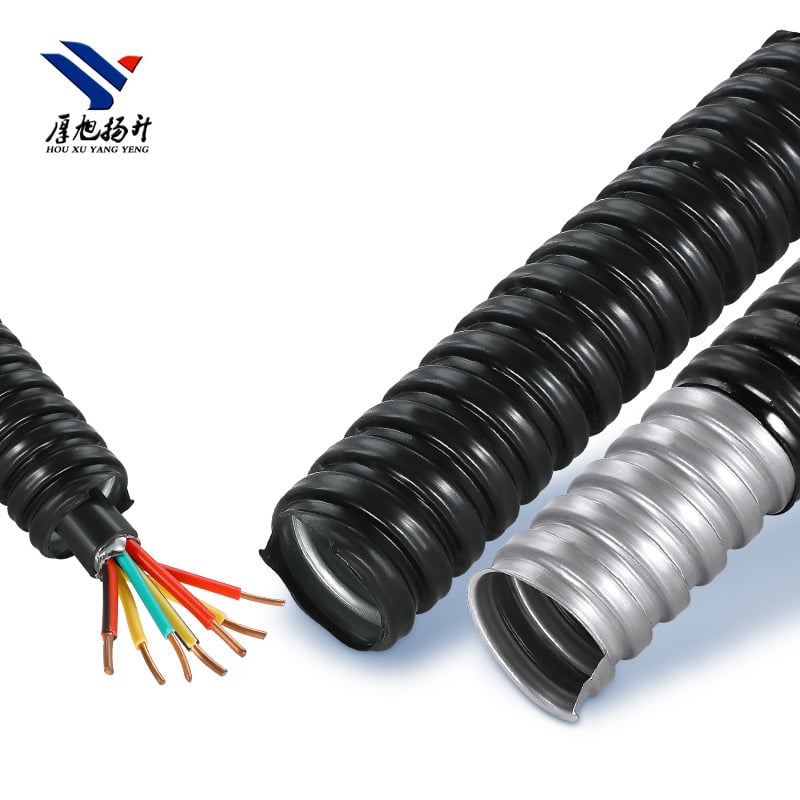
Split wire loom is a flexible tubing with a continuous longitudinal slit running its full length. That slit is the defining feature: it allows cables to be laid into the loom from the side without disconnecting terminations at either end. If you've ever had to retrofit protection onto a wiring run that's already connected at both ends, you'll understand why that matters.
What Does Split Wire Loom Actually Protect Against?
The primary protection that split wire loom provides falls into four categories:
- Abrasion resistance: In panels and machinery, cables frequently run against metallic edges, cable tray lips, or DIN rail hardware. Over time, cable sheath contact with sharp or rough surfaces leads to insulation wear. Split wire loom wraps the bundle, absorbing surface contact and protecting the individual cable sheaths underneath.
- Moisture and fluid exposure: In environments where splash, condensation, or oil mist is present, loom provides a physical barrier that reduces direct contact with cable surfaces. This doesn't replace IP-rated enclosures, but it does reduce the rate at which moisture reaches individual conductors in the bundle.
- Chemical exposure: Industrial environments often involve cleaning agents, hydraulic fluids, or process chemicals. If your cables run near those exposure zones, material selection in the loom itself matters — which we'll cover below.
- Bundle organisation and mechanical protection: Split wire loom keeps multiple cables consolidated into a managed bundle, reducing the risk of individual cables being snagged, pulled, or chafed independently during installation or maintenance.
The Installation Advantage of the Slit Design
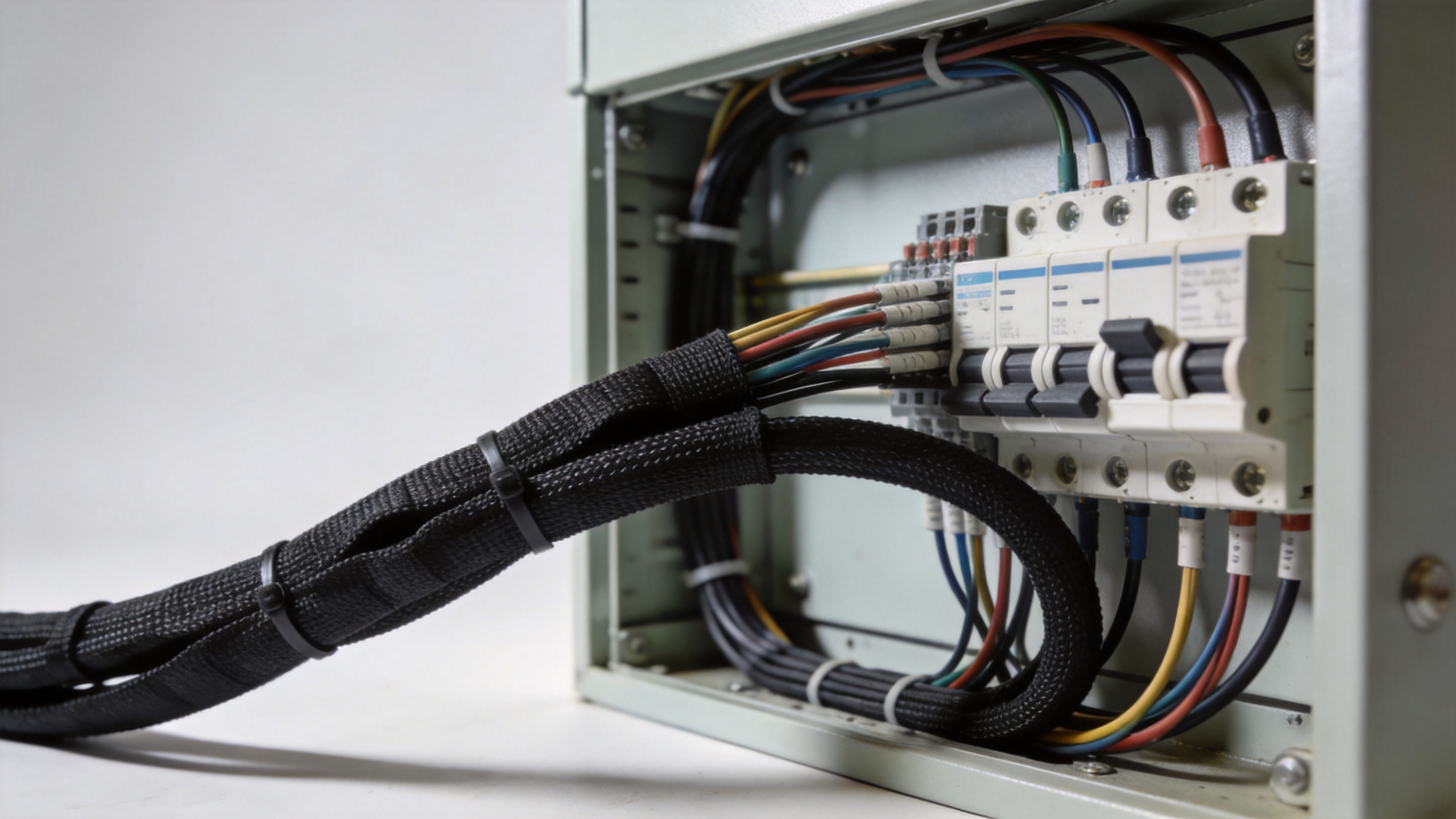
The split design is what separates split wire loom from closed conduit alternatives. When you're working on an existing installation — adding a sensor cable to a machine that's already wired up, or dressing an additional feed into a panel — pulling cables back through a closed tube from the end is not feasible in every scenario. With split wire loom, you peel the slit open, lay the new cables in alongside the existing bundle, and close it. The installation takes minutes, not hours.
For production panel builders doing high-volume builds, this matters in a different way. Split wire loom can be applied to a completed harness without any disconnection — which supports a more efficient assembly sequence where cables are terminated first and dressed afterward.
One installation limitation is worth understanding: the slit closure isn't mechanically locked in most standard configurations. On vertical cable drops where bundle weight pulls down on the run, the loom can open along the slit over time. When covering eight or more cables, what you often see in practice is the loom spiraling open at intervals — especially around vertical sections where cable weight creates consistent downward tension. Tie-wraps at regular intervals — every 150 to 200mm on vertical runs — address this without compromising the installation's accessibility.
Material Selection: Matching Loom to Environment
Not all split wire loom is equivalent, and material selection is where many specifiers cut corners without realising the downstream cost. The main material categories are:
- Polyethylene (PE): Cost-effective and suitable for standard dry indoor environments. Limited temperature range and not recommended where UV exposure or chemical contact is present.
- Polypropylene (PP): Handles higher operating temperatures than PE and offers improved chemical resistance — a practical step-up for installations near cleaning zones or mild solvent exposure.
- Polyamide (PA / nylon): The industrial specification choice. PA loom can tolerate short-term temperatures in the range of 150–175°C, making it appropriate for engine compartments, panel wiring near heat sources, and industrial machinery with sustained thermal load. It also offers better abrasion resistance than PE or PP at elevated temperatures.
- UV-resistant grades: For outdoor cable runs or installations near UV light sources, standard PE or PP will chalk and crack over 12–18 months. UV-stabilised or UV-resistant grades maintain mechanical integrity through extended outdoor exposure.
The right question before specifying split wire loom isn't just "what size do I need?" — it's "what will this cable bundle encounter over a five-year or ten-year service life?" If the installation is mostly dry and indoor with no significant temperature load, standard PE is a reasonable cost-conscious choice. If there's any heat, chemical, or outdoor UV factor involved, move to PP, PA, or a UV-stabilised grade accordingly.
When Split Wire Loom Is the Right Choice — and When It Isn't
If future access to cables is a maintenance requirement — adding conductors, replacing a failed cable, or inspecting an individual wire — split wire loom makes the practical case. The bundle remains accessible at any point without cutting or removing the protection layer.
If the priority is full mechanical impact resistance, continuous IP-rated protection, or routing cables through penetrations and conduit runs, corrugated pipe or solid conduit is the more appropriate choice. Split wire loom is a cable dressing and light mechanical protection product, not a structural protection system.
For panel wiring in dry enclosures, wire harness assembly, and cable management in machine control cabinets, split wire loom typically provides the right combination of protection, installation efficiency, and maintenance accessibility. For outdoor runs or installations with significant mechanical exposure, a closed conduit system will be the more durable long-term choice.
Sizing and Fill Considerations
A useful starting point: size the loom so the cable bundle fills approximately 60–70% of the interior cross-section. This leaves the slit closure under enough tension to stay closed without over-stressing the individual cables, while still leaving room for the loom to open and accept additional cables if the installation expands later. Oversizing leads to a loom that won't stay closed; undersizing means cables are compressed and the outer sheath may be damaged by the loom edges.
Summary
Split wire loom is a practical, installation-efficient cable protection product suited to panel wiring, wire harness assembly, industrial machinery, and anywhere that cable bundles need abrasion protection and organised presentation. The longitudinal slit makes it far faster to apply and retrofit than closed conduit alternatives, and material selection across PE, PP, PA, and UV-resistant grades means it can be matched to a wide range of operating environments. The trade-off against higher-protection closed conduit systems is access versus mechanical protection — and for most panel and harness applications, split wire loom lands on the right side of that trade-off.