
 EN
Which Cable Gland Is Best for Outdoor Use?
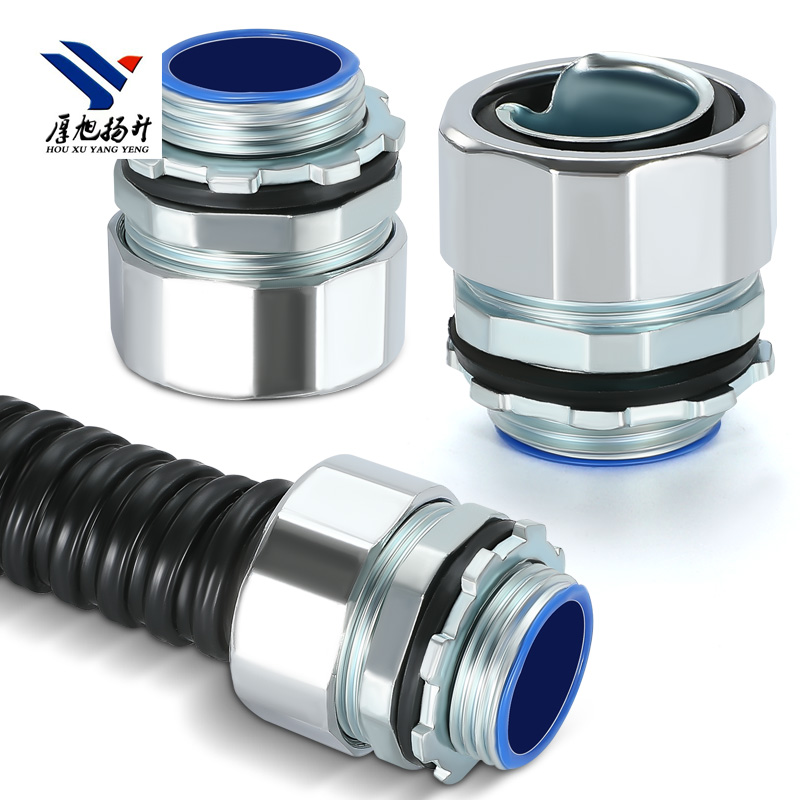
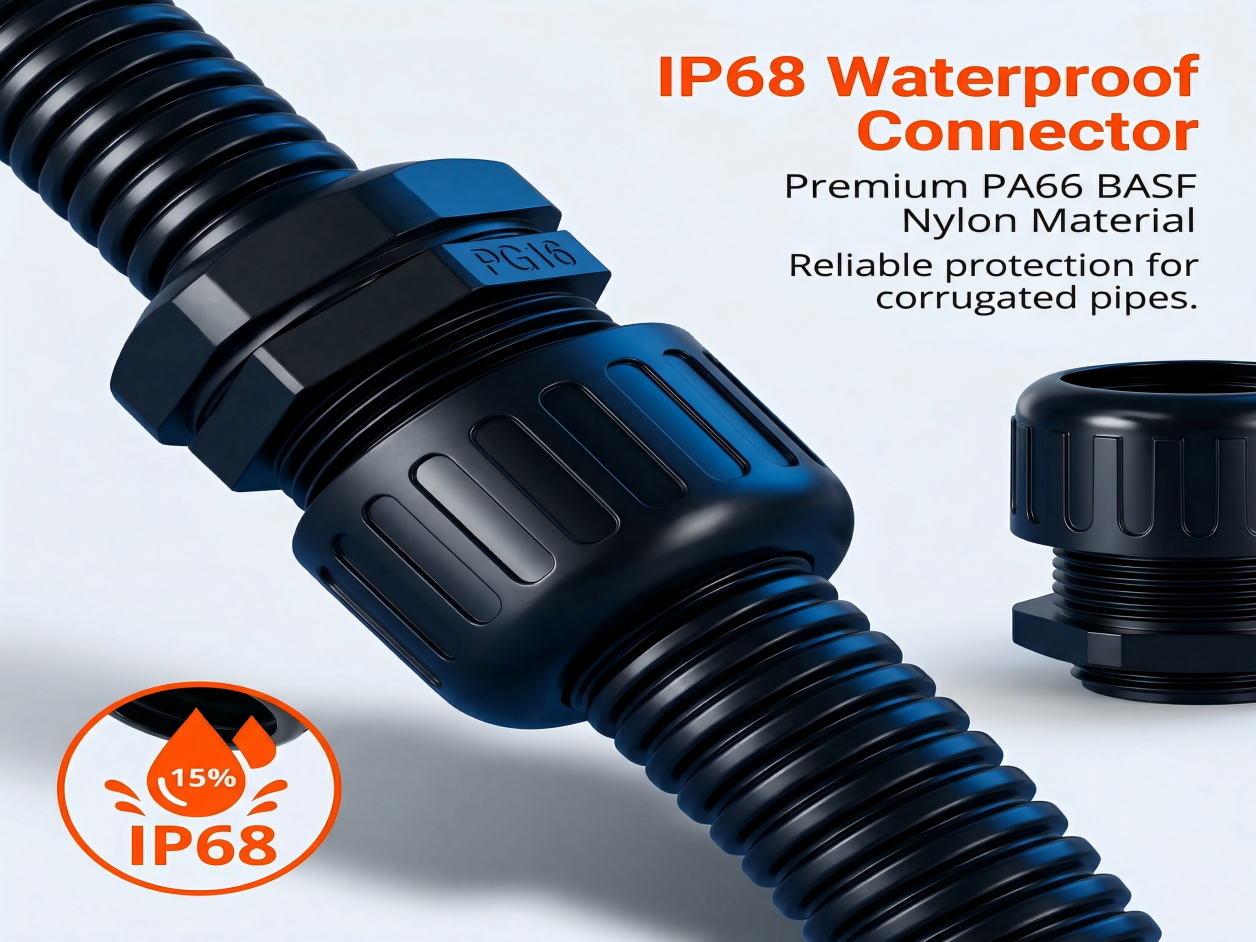
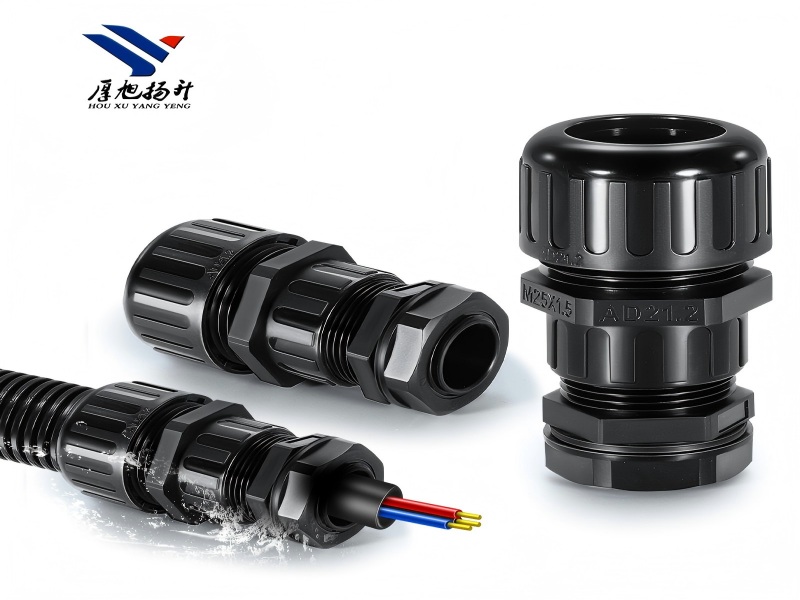
A suitable cable gland for outdoor use is not defined by a single material or IP number. It is the cable gland whose sealing range, thread, body material, and environmental rating match the enclosure, cable, and weather exposure you actually have. For a sheltered outdoor control box, a UV-stabilized polyamide cable gland may be a sensible choice. For a coastal, washdown, corrosive, or high-vibration location, a nickel-plated brass or stainless-steel cable gland may deserve closer evaluation. The question of an outdoor cable gland is therefore a selection question, not a universal product answer.
As a neutral technical consultant, I would start with the failure path: rain, condensation, sunlight, cable movement, and an incorrect fit often work together. A gland that looks fine on installation day can still become the weak point if the cable outer diameter is outside the seal’s effective range or the material is unsuitable for long-term exposure. This guide covers ordinary outdoor electrical enclosures; hazardous-location requirements and local electrical rules need their own product and compliance review.
Start with the outdoor exposure, not the catalog favorite
Before choosing a cable gland, write down where the enclosure sits and what reaches it. Is it under a canopy, exposed to wind-driven rain, frequently washed down, near salt air, or subject to standing water around the entry? Does the cable move with a door, motor, or vibration? Those conditions determine the protection you need more reliably than a broad label such as “waterproof.”
Ingress Protection ratings are useful because the IEC framework grades resistance to dust and liquid ingress. But an IP rating answers only part of the outdoor question. It does not, by itself, demonstrate UV resistance, corrosion resistance, chemical compatibility, vibration performance, or the durability of a specific cable sheath. A high-IP cable gland can still be the wrong outdoor choice if its body or sealing element is not suitable for the environment.
The outdoor cable gland selection matrix
| Installation condition | What to verify | Practical direction |
|---|---|---|
| Sheltered outdoor panel | Rain exposure, cable diameter, compatible thread, documented IP rating | A UV-suitable polyamide cable gland can be practical if the manufacturer data supports the exposure. |
| Open rain or frequent spray | Complete entry seal, washer or O-ring, enclosure interface, installation torque | Choose a cable gland and enclosure arrangement rated for the real water exposure, not merely occasional splash. |
| Coastal or corrosive atmosphere | Body finish, corrosion resistance, seal chemistry, maintenance access | Evaluate nickel-plated brass or stainless steel alongside the actual site chemistry. |
| Vibration or cable movement | Strain relief, locknut retention, cable support, re-tightening procedure | Use a cable gland designed and installed to maintain grip without damaging the sheath. |
| Armored cable entry | Armor termination, earth-continuity requirements, sealing arrangement | Select an armored-cable cable gland only after confirming the cable construction and local requirements. |
Match the material to UV, corrosion, and temperature cycling
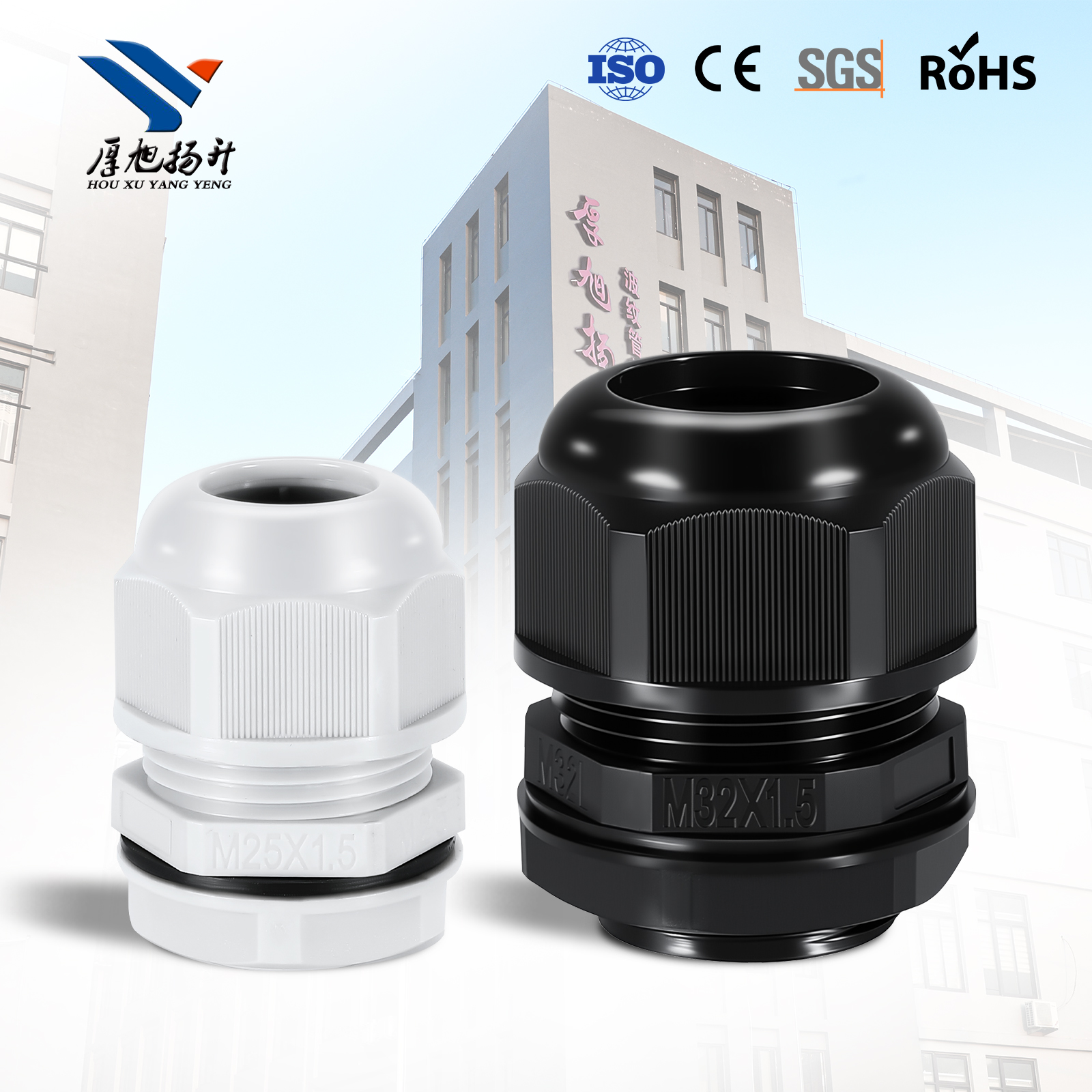
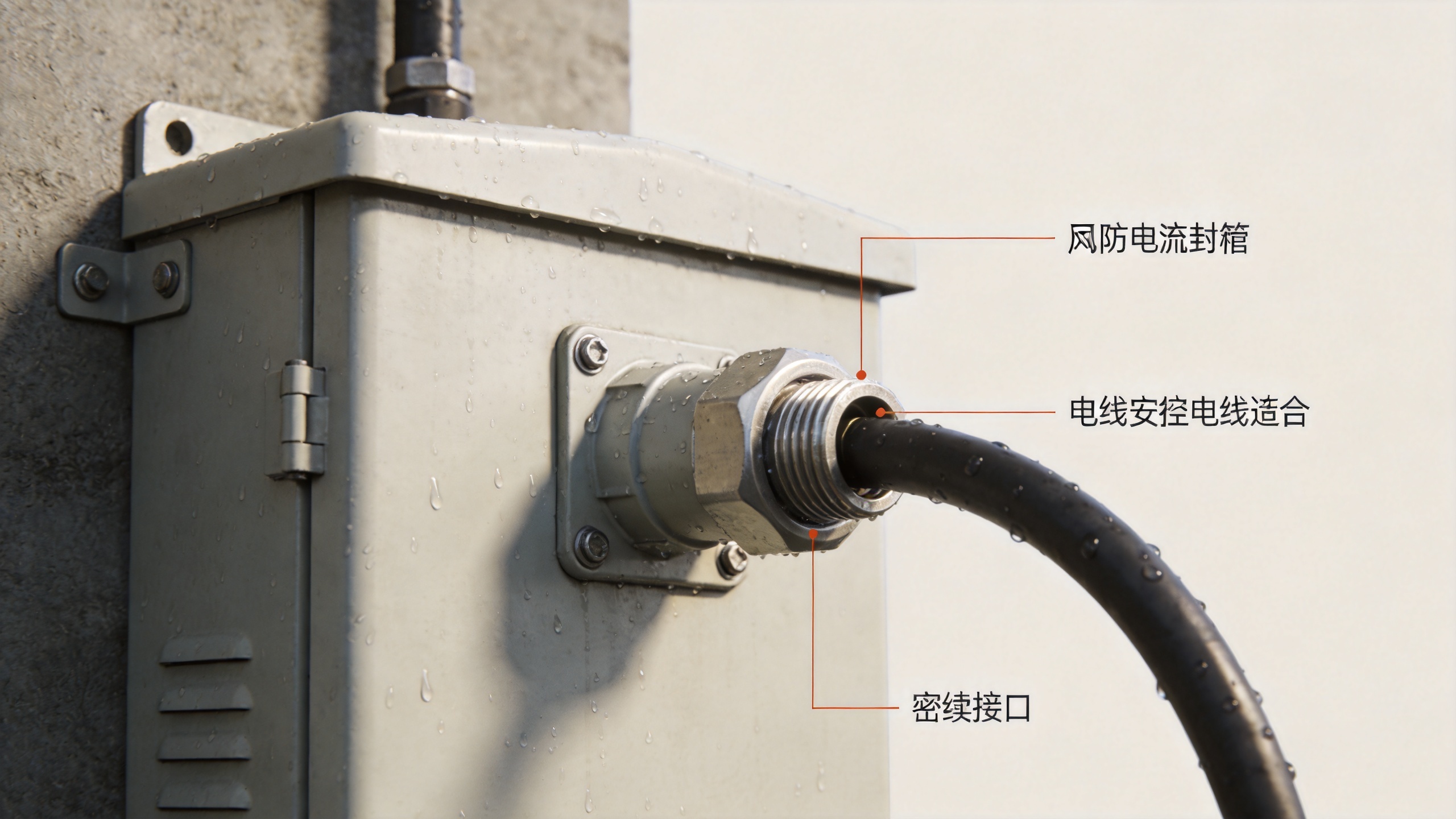
Material selection is where many outdoor specifications become too simple. Polyamide glands can be lightweight, economical, and appropriate for many enclosures when the grade is documented for outdoor exposure. Yet not every plastic cable gland is equally UV-stabilized, chemically resistant, or suited to a severe temperature cycle. Verify the data sheet instead of treating “nylon” as a complete environmental specification.
Nickel-plated brass is often considered when mechanical strength and general industrial durability matter. Stainless steel may be worth assessing where corrosion, aggressive cleaning, or marine conditions are central concerns. Neither material is automatically preferable in every application: sealing materials, enclosure compatibility, installation tools, and cost all still matter. The useful question is, “What will this cable gland contact and endure over its service interval?”
There is a related misconception worth avoiding: a higher IP label does not equal a longer-lived installation. Ingress ratings address dust and water under defined test conditions. Sunlight, salt, chemicals, repeated thermal expansion, and physical impact are separate risks that a buyer should evaluate independently.
Size the cable gland from the real cable outer diameter
A cable gland seals around the cable’s outside jacket, not its conductor cross-section. Measure the actual outer diameter of the cable you will install, then compare it with the manufacturer’s stated clamping range. This is particularly important for multi-core, armored, screened, or heavy-sheathed cables, where the same conductor size can have a different overall diameter.
Do not assume that a larger cable gland is a safe catch-all. If a cable sits near or below the lower end of the sealing range, the compression element may not grip and seal consistently. Equally, forcing an oversized cable into a smaller cable gland can damage the jacket or prevent correct assembly. If the project uses several cable diameters, specify each range deliberately or validate a sample against the real cable before ordering volume quantities.
Confirm thread, panel interface, and sealing parts together
The body thread must match the enclosure entry. Metric, PG, and NPT formats are not interchangeable just because their nominal dimensions look similar. Confirm the enclosure drawing, thread type, panel thickness, and whether the installation requires a locknut, sealing washer, or O-ring. A correctly selected cable gland can still leak if the interface between the gland shoulder and the enclosure is not sealed as intended.
This point often saves more trouble than upgrading material. A cable gland installed in the wrong thread or with a missing sealing component cannot deliver the protection suggested by its catalog rating. For thin-wall panels, also check whether the specified arrangement has sufficient thread engagement and whether the manufacturer calls for a particular washer or torque process.
Install and inspect the cable gland as a system
Outdoor reliability depends on installation. Use the manufacturer’s instructions for tightening and torque rather than relying on “as tight as possible.” Over-tightening can deform a seal, crack a polymer part, or damage the cable jacket; under-tightening can leave inadequate grip. Support the cable so its weight or movement is not transferred continuously to the cable gland.
After installation, check that the cable gland is fully seated, the seal contacts the cable evenly, the enclosure interface is complete, and unused openings are closed with compatible blanking plugs. During maintenance, look for fading, chalking, cracks, corrosion, loose locknuts, and damaged cable jackets. These visible signs are prompts to investigate the entry system before moisture reaches terminals or controls.
A practical recommendation
For many ordinary outdoor panels, a practical cable gland is a documented UV-suitable model with the correct IP rating for the real exposure, an exact cable-diameter fit, and a matching thread and sealing arrangement. Move toward more corrosion-resistant metal options when the site adds salt, chemicals, repeated washdown, high mechanical demand, or a long maintenance interval. For any uncertain specification, request technical drawings, clamping-range data, material information, and a sample for fitment testing.
In short, select the cable gland after mapping exposure, cable outer diameter, thread standard, material risks, and installation method. That approach is more dependable than choosing by price, color, or a headline IP number alone.