
 EN
EN


The Mechanics of Vibration Reduction: How Bellows Brackets Dampen Dynamic Energy
For design engineers working on high-precision motion platforms, semiconductor fabrication equipment, or advanced optical systems, vibration is a primary enemy of accuracy. Even imperceptible tremors from a nearby pump, an air compressor, or the building's structural resonance can introduce devastating errors into the manufacturing process. When a machine's components cannot be perfectly rigid, engineers often turn to flexible structures to absorb these dynamic forces. The bellows bracket is one of the most sophisticated solutions to this problem. Unlike a solid metal mount, which transmits vibration directly, a bellows bracket is engineered with corrugated, thin-walled metal folds that literally flex under load. This intentional mechanical flexibility allows the bracket to act as a shock absorber for high-frequency energy. Understanding the physics behind how these convoluted structures reduce vibration is essential for selecting the right configuration and ensuring the stability of sensitive equipment.
Turning Kinetic Energy into Heat Through Hysteretic Damping
The fundamental mechanism that allows a bellows bracket to reduce vibration is a process known as hysteretic damping. When the bracket is subjected to dynamic mechanical energy, its thin, convoluted metal walls undergo cyclic bending and axial compression. This movement is not purely elastic. As the metal folds repeatedly, internal friction occurs within the crystalline structure of the alloy. This friction converts the mechanical kinetic energy into a negligible amount of heat, effectively dissipating the vibration before it can travel further downstream. The beauty of this design is that it leverages the inherent material properties of the bellows without requiring complex active electronic controls. By absorbing the energy locally, the bracket protects sensitive components mounted to the motion axis from the destructive effects of continuous oscillation.
Shifting the Resonance Frequency for Superior Isolation
Beyond simply absorbing energy, a well-designed bellows bracket performs a second crucial function: it detunes the system's natural frequency. Every mechanical assembly has a resonant frequency at which it will vibrate violently when exposed to matching excitation. If a pump or motor operates at a frequency that matches the mount's natural frequency, the vibration amplitude will skyrocket, causing rapid fatigue and potential failure. By engineering the bellows bracket with a specific stiffness, designers can shift the assembly's natural frequency well below the dominant excitation frequencies of the operating environment. This deliberate mismatch prevents the system from ever reaching resonance. High-frequency vibrations are largely reflected at the bracket's input, while lower-frequency energy is safely absorbed. This dual action of active damping and frequency detuning is what gives the bellows bracket its unparalleled ability to protect precision alignment in dynamic systems.
The Critical Balance of Stiffness and Fatigue Resistance
Selecting the correct material and geometry for a bellows bracket requires a delicate trade-off. Stainless steels, such as the common 316L grade, offer a good balance of corrosion resistance and moderate stiffness, making them a standard choice for many industrial applications. However, in environments where the operating temperature exceeds 400 degrees Celsius, nickel-based superalloys like Inconel 718 are often necessary to maintain structural integrity. These superalloys retain their yield strength at extreme temperatures, though their higher stiffness slightly reduces the damping capacity. The geometry of the convolutions is equally critical. A bracket with many deep, thin folds will be highly compliant, offering excellent damping but potentially risking buckling under heavy static loads. Conversely, a bracket with thick, shallow folds is stiffer, providing less damping but greater load-bearing capacity. The ideal design is always application-specific, tuned to isolate the critical frequency band while preserving the mechanical support required by the assembly.
Real-World Validation in Semiconductor Manufacturing
The theoretical advantages of the bellows bracket are clearly validated in real-world production environments. In semiconductor lithography, the positioning accuracy of the wafer stage is measured in nanometers. Even the slightest vibration from the vacuum pumps or linear actuators can cause the optics to blur, ruining the delicate printed patterns. A leading manufacturer in this industry recently retrofitted a rigid coupling in their vacuum system with a custom-designed bellows bracket. The goal was to isolate the precision optical column from the constant low-frequency noise of the supporting equipment. Post-installation, laser interferometer monitoring revealed a dramatic reduction in the displacement of the optical mount. The bracket acted as a low-pass mechanical filter, effectively cutting off the transmission of vibrations above twenty hertz. This field performance confirmed the lab simulations and proved that a bellows bracket can reliably stabilize precision platforms in one of the most demanding manufacturing environments on the planet.
Understanding the Low-Frequency Limitations
Despite its exceptional mid-frequency performance, the bellows bracket has a distinct limitation at very low frequencies. Below approximately 15 hertz, the mechanical energy consists of large, slow oscillations. At these low speeds, the elastic deformation of the metal folds is insufficient to absorb the energy. The bracket essentially behaves as a rigid mount, transmitting the sub-15 hertz vibrations directly to the connected components. For applications that require isolation from these ultra-low frequencies, engineers must look beyond the basic bellows design. One effective mitigation strategy is to incorporate supplementary damping elements, such as viscoelastic pads, directly into the mounting interface. Alternatively, pairing the bellows bracket with a separate, softer passive isolator can help attenuate the remaining low-frequency energy. Understanding this physical limitation is key to specifying the correct damping strategy for a specific motion profile.
The Impact of Installation Quality on Damping Efficiency
Even the most meticulously engineered bellows bracket will fail to meet its performance potential if it is installed incorrectly. Angular misalignment between the bracket and the motion axis is a persistent source of field failures. If the bracket is mounted even slightly off-angle, the stress becomes concentrated on one side of the convolutions. This uneven loading dramatically reduces the bracket's ability to flex uniformly, degrading the hysteretic damping effect. To ensure optimal performance, installation technicians must use precision alignment tools to verify the bracket's concentricity before tightening the final fasteners. Furthermore, the torque applied to the mounting bolts must be strictly controlled. Over-tightening the bolts can crush the mounting interface or distort the bracket base, while under-tightening introduces micro-play that allows the assembly to rock under load. Following a disciplined, documented installation protocol is the only way to guarantee that the bracket performs as designed.
Advanced Treatments for Broad-Spectrum Energy Dissipation
For systems exposed to a wide range of vibration frequencies, standard bellows brackets can be enhanced with specialized structural treatments. Engineers have found that applying constrained-layer damping laminates directly to the bracket's outer surface significantly increases the energy dissipation capability. These laminates consist of a thin layer of viscoelastic material sandwiched between two stiff metallic skins. When the bracket flexes, the viscoelastic core shears, converting mechanical energy into heat much more effectively than bare metal alone. Laboratory tests confirm that these treatments can provide an additional ten to fifteen percent attenuation in the critical 60 to 200 hertz range. While this adds a slight manufacturing cost, the improvement in vibration isolation is often essential for equipment operating in broadband noise environments.
How Manufacturing Precision Guarantees Damping Performance
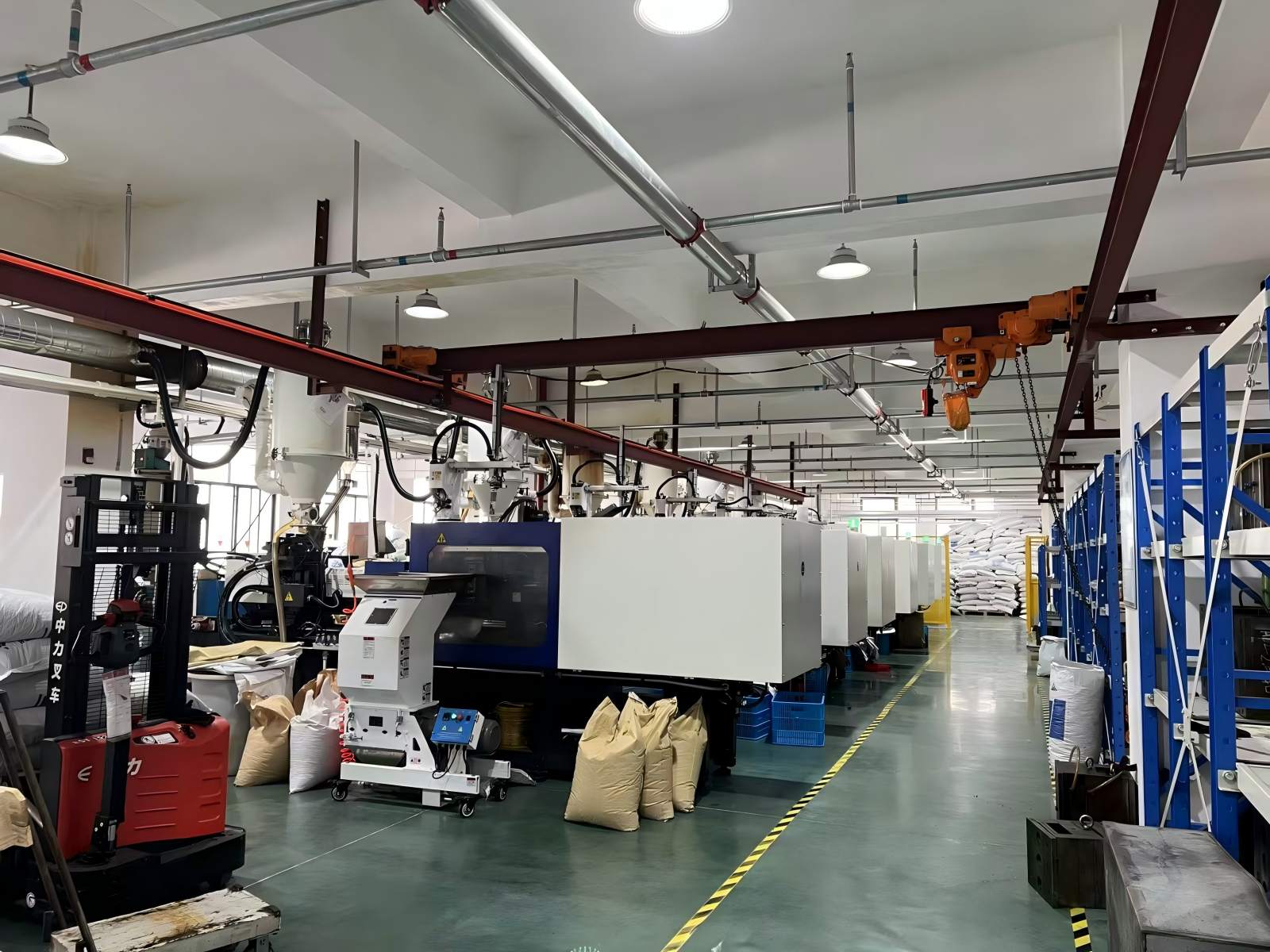
Ultimately, the ability of a bellows bracket to consistently dampen vibration depends entirely on the precision of the manufacturing process. The exact thickness of the metal wall, the uniformity of the convolution pitch, and the quality of the surface finish all dictate how the bracket will respond to dynamic stress. Manufacturers who adhere to rigorous international quality standards, such as ISO 9001, maintain strict control over material traceability and geometrical tolerances. By overseeing the sourcing of the raw alloy and implementing precise forming techniques, reliable suppliers ensure that every bracket leaving the factory behaves predictably. For a system integrator who depends on these components to maintain the nanometer-level accuracy of their equipment, sourcing from a disciplined manufacturing partner provides the ultimate confidence that the vibration dampening will perform exactly as engineered.