
 EN

Why Is Corrugated Conduit Popular in Cable Management?
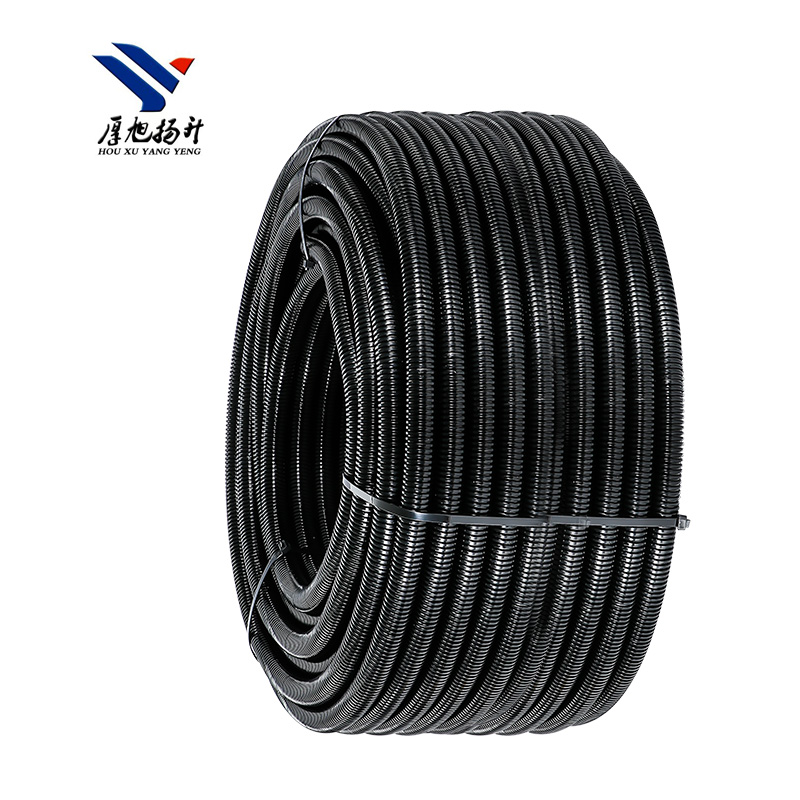
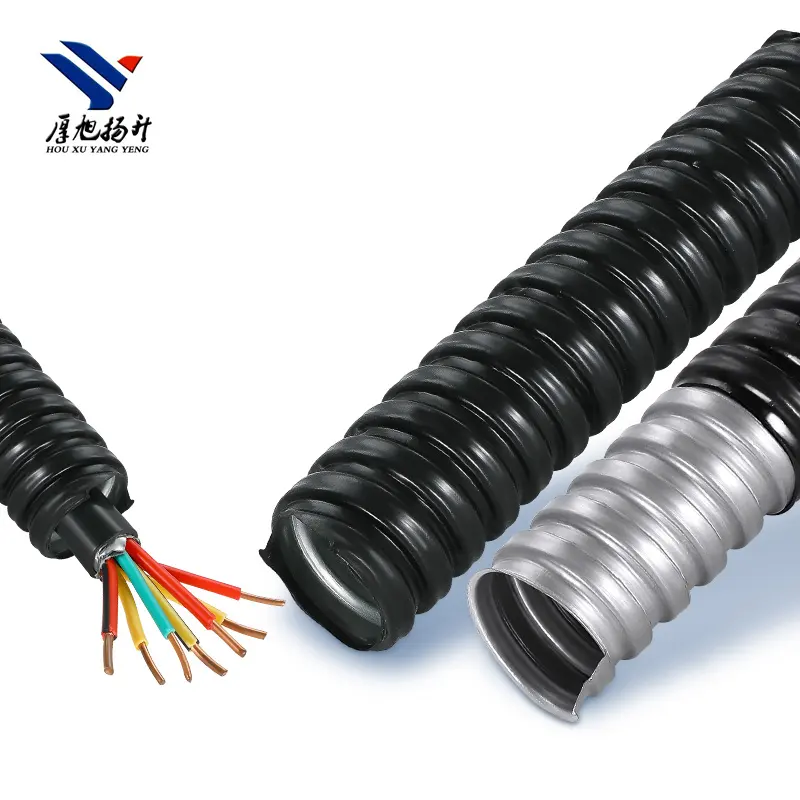
Corrugated conduit is popular because it solves a very practical routing problem: cables rarely travel in a perfectly straight line. Inside equipment, around machine frames, between a panel and a moving component, or through a crowded retrofit, the route often needs to turn without making cable installation unnecessarily difficult. A corrugated conduit gives a cable bundle an organized protective path while remaining easier to route than a rigid alternative in many applications.
That does not mean corrugated conduit is automatically the right choice for every run. An installation engineer still needs to check cable diameter, bend requirements, the environment, connector compatibility, and the way the cable will move after installation. Popularity comes from useful flexibility and system simplicity, not from a promise that one product solves every protection problem.
Flexibility makes difficult cable routes more manageable
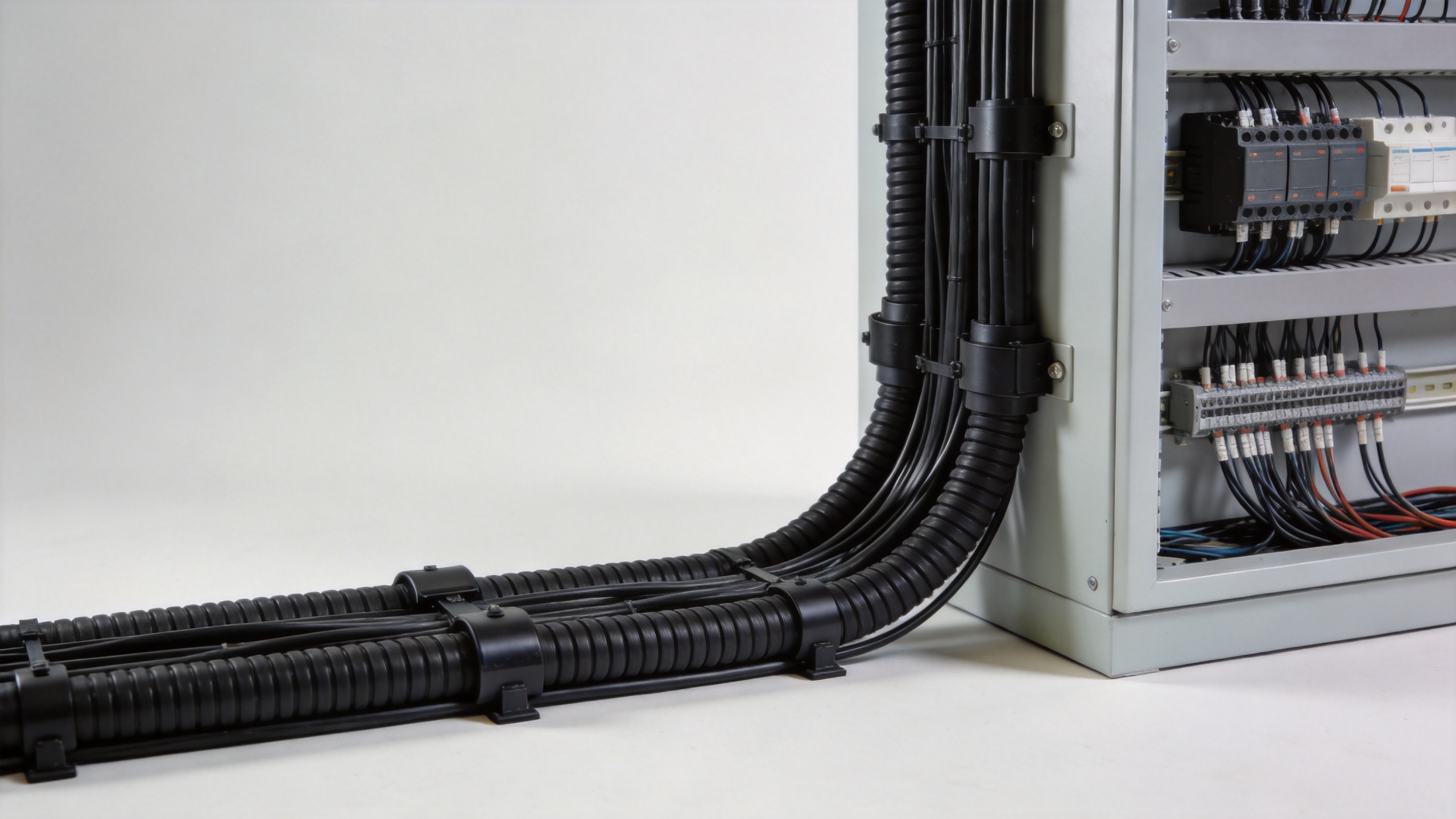
The repeating profile of corrugated conduit lets the tube flex along a route that would be awkward for straight rigid pipe. That is helpful where a cable exits an enclosure at an angle, passes around a frame member, or approaches equipment with limited clearance. Instead of building several fixed bends into a route, an installer can often guide the corrugated conduit through a smoother path.
In practice, this can reduce the number of directional changes that have to be planned in advance. It can also make site adjustments easier when the final cable path differs slightly from a drawing. The benefit is especially noticeable in compact panels, machinery wiring, and retrofit work, where the available route becomes clear only after other components are in place.
Flexibility has a limit, though. A corrugated conduit should not be forced into a bend tighter than the cable and conduit can tolerate. If the bend becomes too tight, the conduit may kink and the cable may be harder to pull or service. Before fixing the run, ask a simple question: can the cable still follow this path without being squeezed, dragged sharply, or bent beyond its own requirement?
It keeps cable runs organized without making them inaccessible
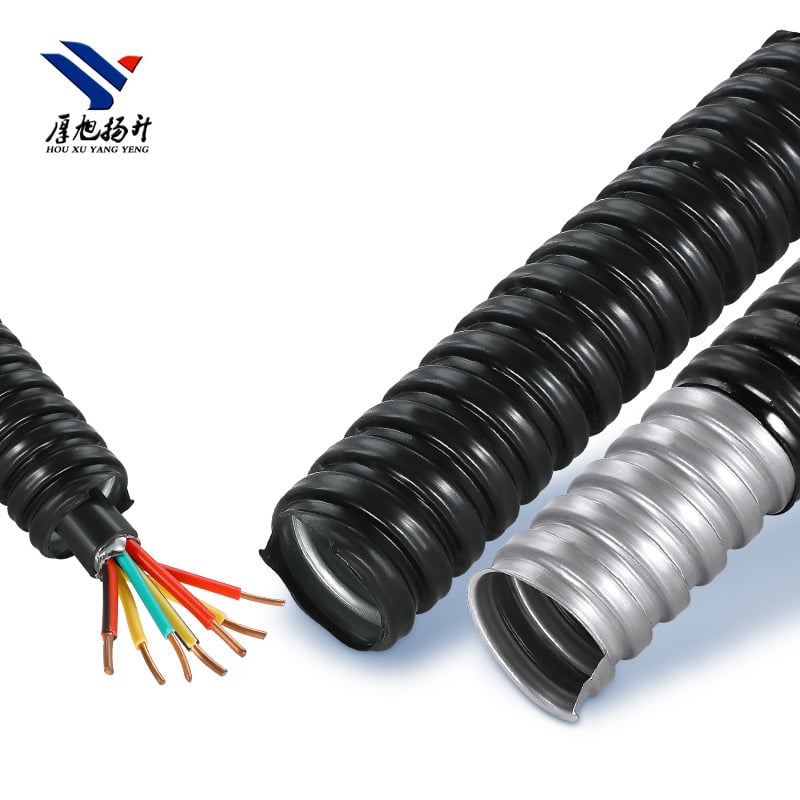
Loose cables are difficult to inspect, protect, and change later. Corrugated conduit groups conductors into a visible route, which can make a machine, cabinet, or building installation easier to understand during commissioning and maintenance. The protective outer layer also helps separate a cable bundle from routine contact with nearby surfaces.
For a new installation, that organization can make clamp placement and route planning more consistent. For a modification, corrugated conduit can be useful when a cable must be added after the surrounding assembly is already complete. A smooth internal bore, when specified for that purpose, may reduce pull friction on a longer run. It is still necessary to leave suitable space for the bundle; a conduit that is nominally large enough can become difficult to work with if cable fill, bends, and pull direction are ignored.
Accessibility should be considered at the same time as protection. A very tightly packed route may look neat on day one but be difficult to open, inspect, or extend later. Corrugated conduit is most useful when it is part of a serviceable route rather than a cover placed over an already congested bundle.
Material options allow the route to match the environment
Another reason corrugated conduit is widely used is that the general form is available in different materials. Depending on the application, buyers may compare PA, PP, PVC, HDPE, or metal-based alternatives. The right material depends on the actual exposure, not simply on the lowest initial price.
For example, an indoor panel route and an outdoor cable run do not face the same conditions. UV exposure, temperature swings, oils, cleaning chemicals, abrasion, vibration, and cold-weather flexibility can all change the selection. A standard grade that works in a protected indoor location may be unsuitable near heat, chemicals, or prolonged sunlight. If an installation is outdoors or in a harsh area, verify the supplier documentation for the exact material grade and the complete conduit system rather than assuming every corrugated conduit has the same resistance.
Material selection also affects future maintenance. A route that remains flexible and intact in its operating environment is easier to service than one that has hardened, cracked, or become difficult to open. This is why a quick environmental review before purchase is often more valuable than comparing only nominal diameter.
It supports modular cable-management systems
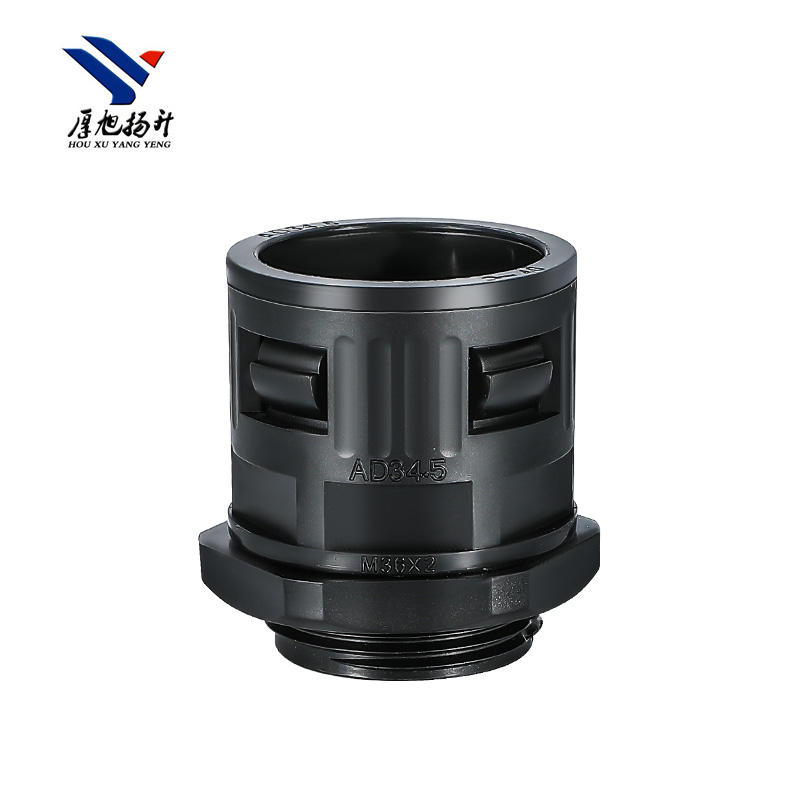
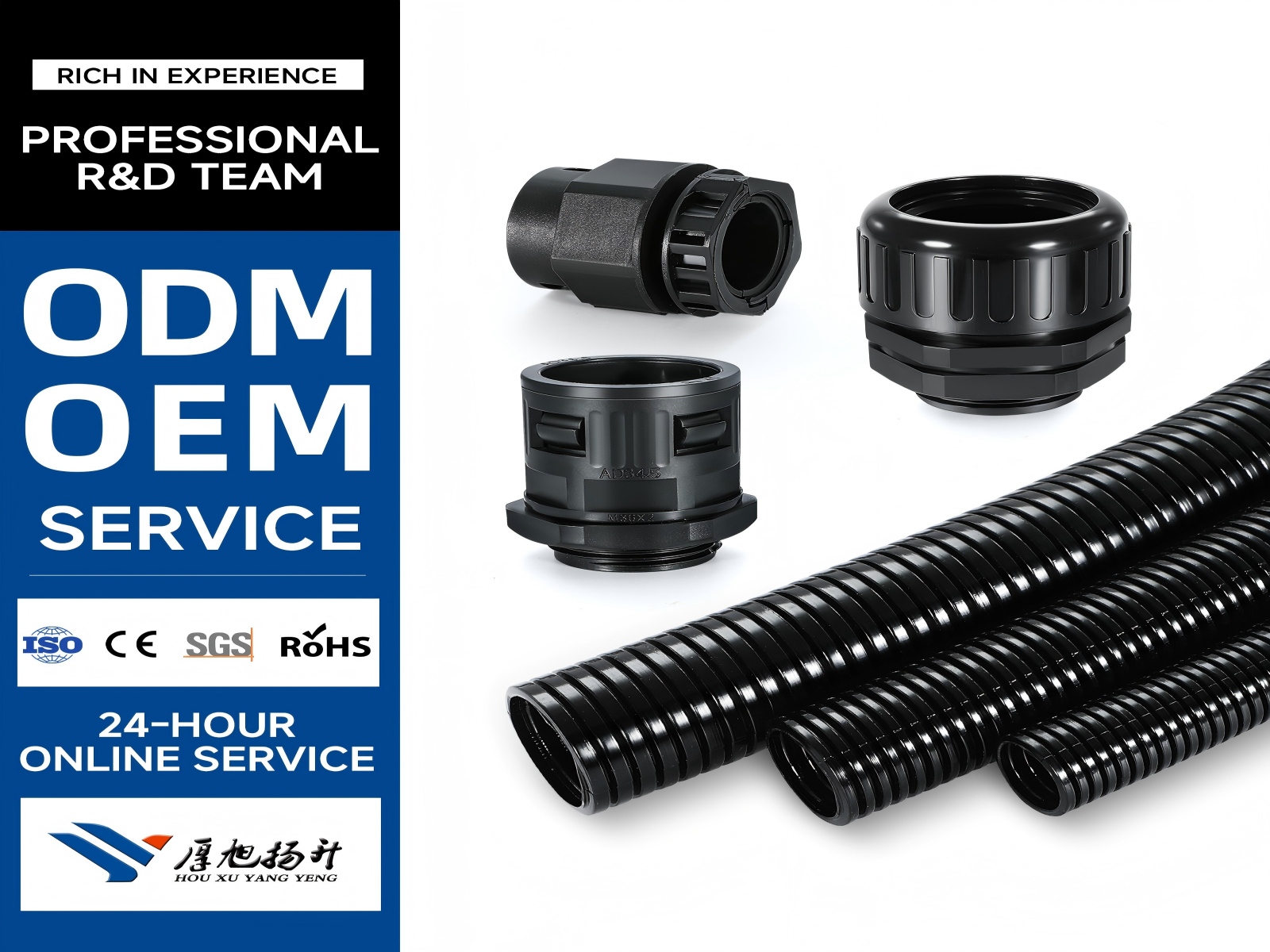
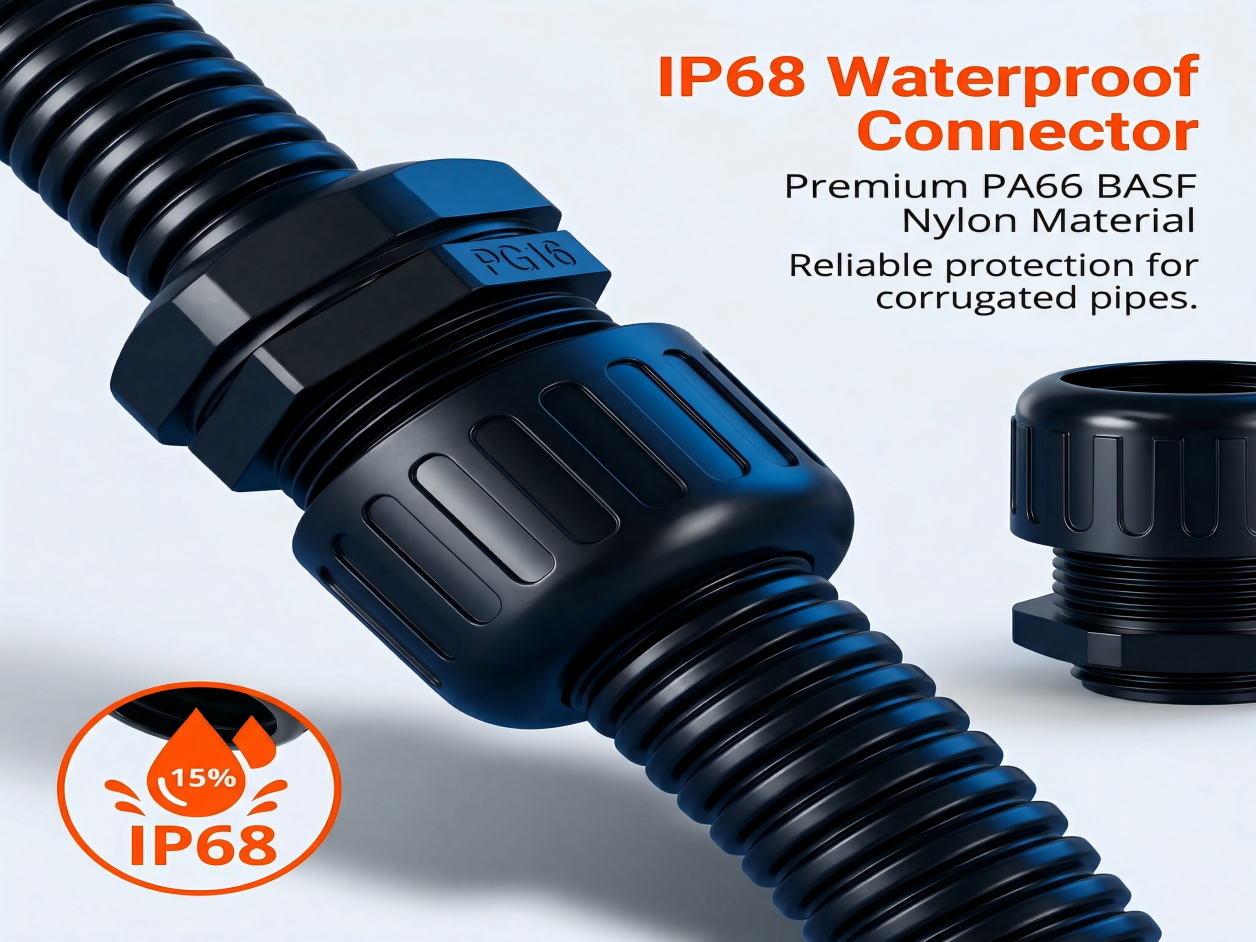
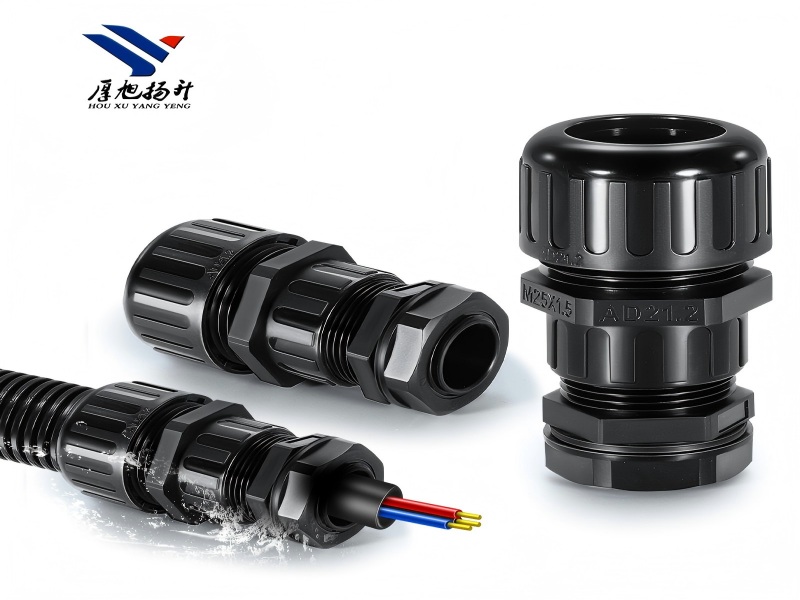
Corrugated conduit is commonly used with connectors, fittings, clamps, and enclosure entries. When the pipe and accessories are selected as a compatible system, the installer has a clearer way to route, secure, and terminate the run. This modular approach is useful for projects that use several conduit sizes or must transition from protected routing to an enclosure entry.
Compatibility deserves more attention than it usually receives. The outer diameter, profile, connector design, thread standard, wall thickness, and engagement depth can all affect whether a fitting grips the conduit correctly. A connector that looks close in size may not provide a secure mechanical connection. Use the manufacturer’s dimensional data for the selected system, and perform an installation check before repeating the arrangement across a larger project.
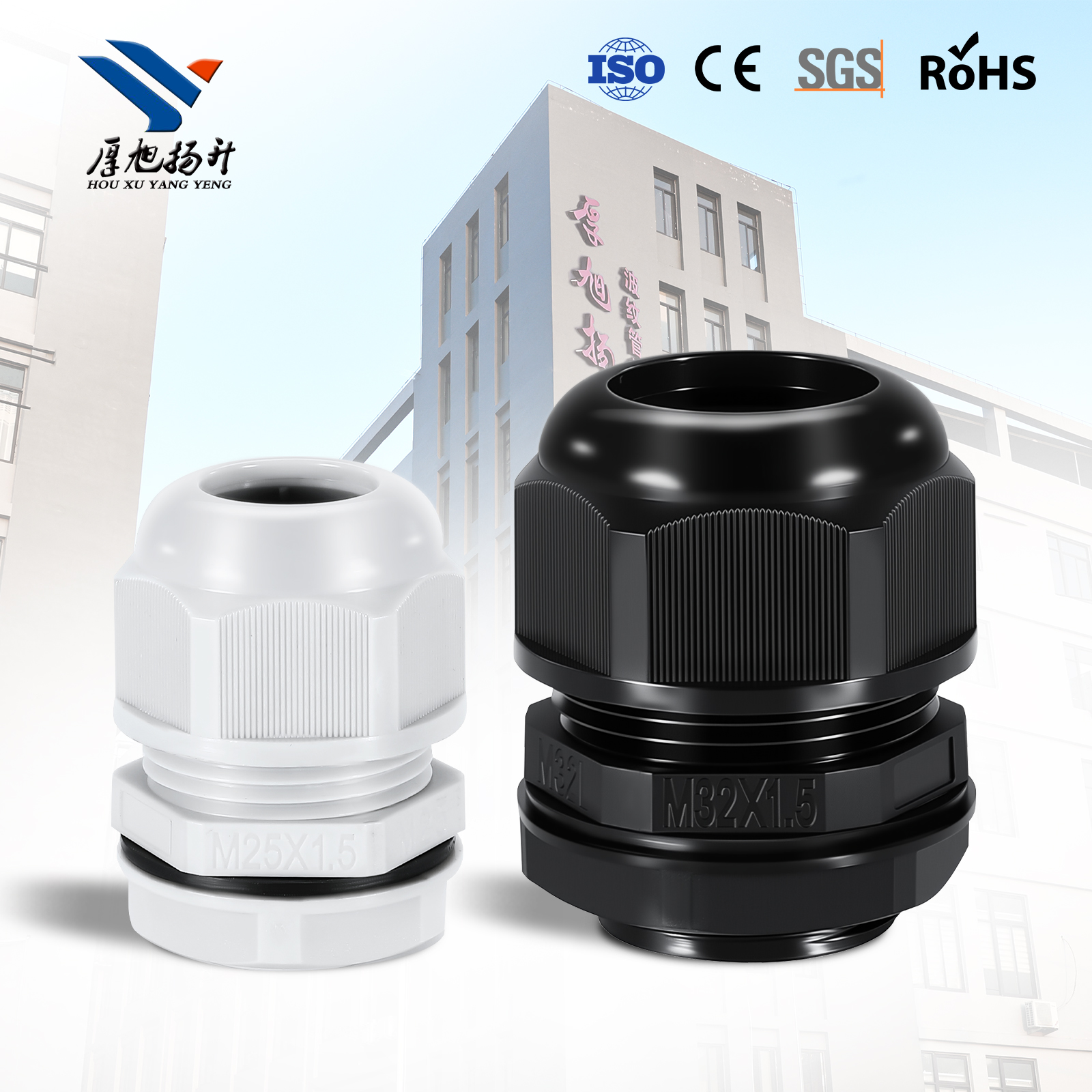
It is also important to separate functions. Corrugated conduit can organize and protect a cable route, but it does not inherently provide strain relief. Likewise, a pipe alone does not establish the ingress-protection performance of an enclosure entry. Where sealing, pull resistance, or an IP-rated interface is required, the complete assembly must be selected and installed for that requirement.
Why installers value it on real jobs
On a job site, the attraction of corrugated conduit is often straightforward: it is adaptable. A route can be planned with fewer rigid transitions, adjusted around equipment, and secured with appropriate clips or fittings. That practicality can save installation effort without turning cable management into an improvised solution.
Consider a machine connection where the cable leaves a cabinet and travels to equipment with a small amount of movement or vibration. A carefully supported corrugated conduit may follow the route more naturally than a rigid section. But the support spacing, bend path, cable movement, and connector retention still need to be checked. Flexibility is helpful only when the route is controlled.
The same thinking applies to long runs. Corrugated conduit can simplify routing, yet drainage, thermal movement, cable pull length, and exposure should be assessed before it is fixed in place. In other words, choose the route first, then choose the conduit design that fits it—not the other way around.
A practical selection checklist
- Confirm the cable bundle’s outside dimensions and leave workable internal space.
- Check the cable’s required bend radius before setting the conduit path.
- Match the material grade to UV, temperature, chemical, abrasion, and vibration exposure.
- Use compatible connectors and fittings; verify dimensions and engagement instead of relying on appearance.
- Decide separately how the installation will achieve strain relief, sealing, support, and any required ingress protection.
- Plan for inspection, cable replacement, and additions before final clamps are installed.
Conclusion
Corrugated conduit remains popular in cable management because it combines route flexibility, cable organization, and broad system compatibility. It can make complex paths easier to manage and give cable runs a cleaner, more protected layout. The strongest results come when corrugated conduit is chosen as part of a complete installation: sized for the cable bundle, routed within bend limits, matched to the environment, and connected with compatible accessories. That is the difference between a convenient cover and a reliable cable-management solution.