
 EN


Split Wire Loom for Industrial Cable Retrofits: Selection, Installation, and Compliance Guide
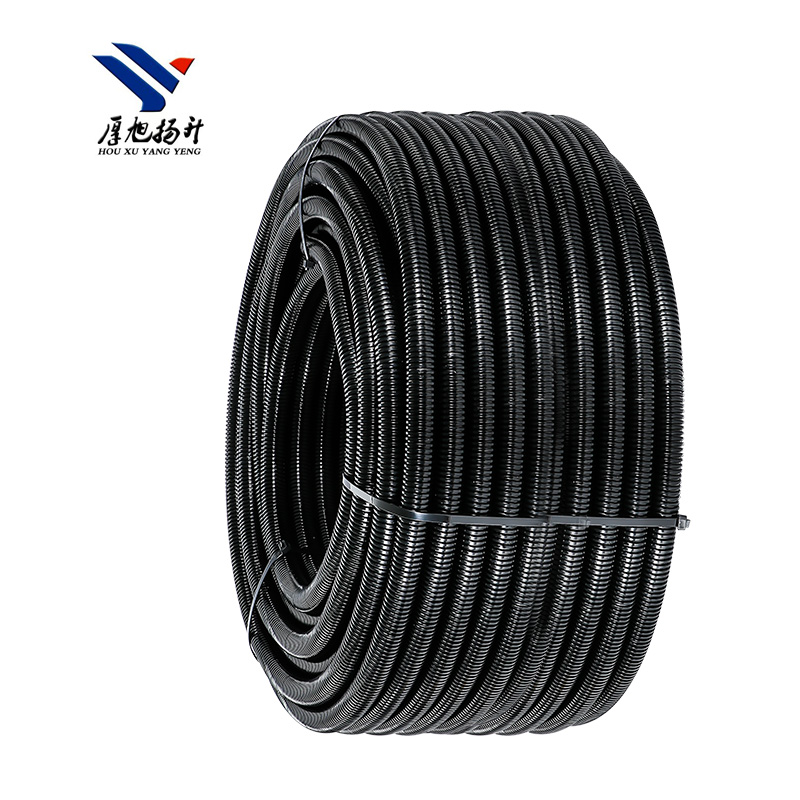
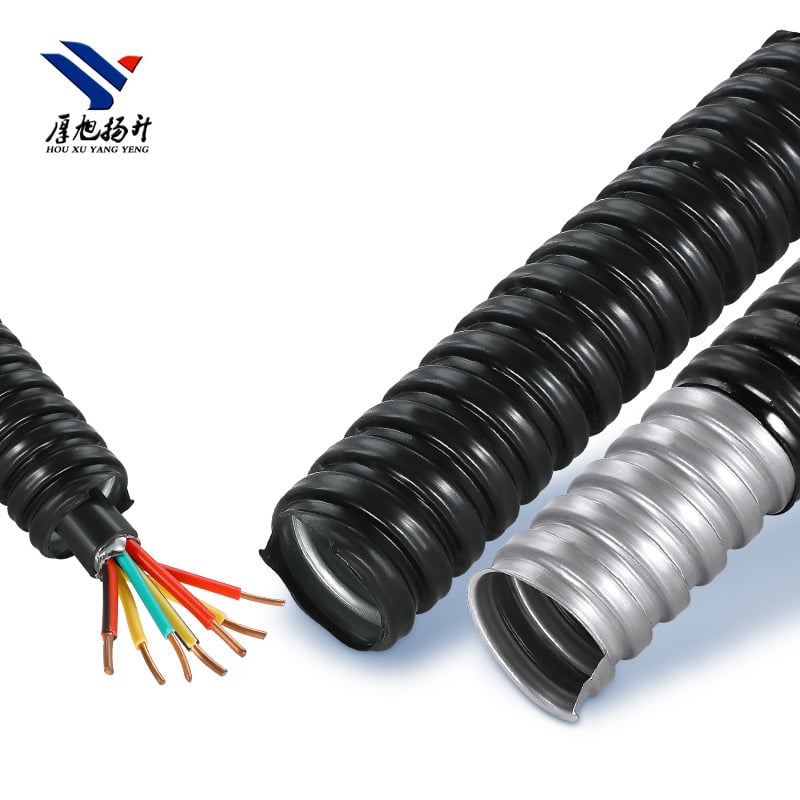
A wiring upgrade rarely happens on a clean slate. Most manufacturing plants, automation integrators, and OEM machine builders need to add mechanical protection to cables that are already installed, routed, and energized. A split wire loom solves this exact engineering challenge: the flexible conduit is pre-slit along its longitudinal axis with an overlapping seam that snaps closed around existing harnesses.
There is no need to de-terminate conductors, pull wiring back through bulkheads, or shut down a production line just to install a protective sleeve. For plant maintenance (MRO) crews and electrical panel builders alike, switching to a split wire loom delivers immediate reductions in labor hours and costly downtime.
What Makes the Split Wire Loom Design Different?
How the Dual Overlapping Seam Works
A standard closed corrugated conduit is a continuous extruded tube where wires can only enter from the ends. A split wire loom, by contrast, features a longitudinal opening engineered with two interlocking or overlapping lips that close like a C-shaped sleeve.
In industrial-grade tubing, this seam is not a structural weak point. High-performance designs—specifically double-layer overlapping split flexible conduit—use an inner and outer coaxial profile where the two walls tuck past each other. This dual-overlap geometry maintains uniform wall thickness along the splice line, allowing the conduit to flex open to accept a wire bundle while preventing conductors from slipping out under tight bending radii or heavy vibration.
Split Wire Loom vs. Closed Flexible Conduit
Choosing between open and closed tubing depends on whether the harness is being built on a bench or retrofitted in the field. Closed flexible conduit remains the standard for new, continuous liquid-tight runs where unterminated wire is pulled from scratch. However, threading an existing, pre-terminated multi-pin harness through closed tubing requires disconnecting terminal blocks or cutting connectors.
| Engineering Parameter | Split Wire Loom (Overlapping Seam) | Closed Corrugated Conduit |
|---|---|---|
| Primary Application | Field retrofits, pre-terminated harnesses, MRO repairs | New equipment builds, underground or washdown runs |
| Installation Method | Snap-on radially over existing cables in place | Axial wire pulling from one end to the other |
| Re-termination Required | None — installs over existing plugs and lugs | Yes — connectors must be removed before threading |
| Inspection & Branching | Peel open at any point to trace faults or exit breakout wires | Requires cutting conduit or disassembling end fittings |
| Ingress Protection (IP) | Dust and splash resistant (up to IP54–IP65 with dual-layer seam) | Submersion and high-pressure washdown (IP67–IP68 with sealed fittings) |
Installation Efficiency and Field Retrofit Speed
Tool-Free Routing Without Disconnecting Wires
The primary operational advantage of a split wire loom is installation speed. Because the tubing opens along its entire length, an electrician simply separates the seam, lays the existing cable bundle inside, and presses the overlapping edges shut—requiring no specialized tools beyond gloved hands or a basic harness insertion tool.
Manufacturers specializing in open-type conduit assemblies and quick-connect fittings, including Solithos, report that tool-free split conduit systems cut field installation time by up to 80% compared to measuring, cutting, and threading closed conduit on site. In live plant environments, this eliminates panel disassembly, wire re-labeling, and post-installation continuity re-testing. The corrugated profile also provides a tight bend radius, making it easy to route around pneumatic cylinders, frame corners, and existing cable trays.
Field Case Study: Vertical Packaging Line Retrofit
On a high-speed contract packaging floor, a vertical form-fill-seal (VFFS) machine experienced recurring control cable wear where a moving carriage dragged a multi-core sensor bundle across a stamped steel bracket. The outer jacket showed visible abrasion, yet the line could not be taken offline during peak seasonal production. Furthermore, the harness was factory-molded to M12 connectors at both ends with zero slack for re-pulling.
During a scheduled 20-minute film changeover, a maintenance technician installed a PA66 split wire loom directly over the abraded harness section in place, securing both ends with snap-in open-type mounting clamps. The entire cable run was armored within a single shift with zero unscheduled downtime. When a sensor required replacement three months later, the technician peeled back the overlapping seam in seconds to trace the lead without dismantling the conduit run.
Cable Protection, Fault Tracing, and Harness Management
Abrasion Resistance and Dynamic Bundling
Mechanical abrasion is a leading cause of premature electrical failure in industrial machinery. Continuous vibration against sheet-metal cutouts, weld spatter, and moving actuators wears through primary PVC or PUR cable insulation long before a short circuit trips a breaker.
Installing a split wire loom places a sacrificial, impact-resistant polyamide wall between the conductor jacket and external hazards, while the corrugated ribs add crush resistance and standoff clearance. Simultaneously, it consolidates loose single-core wires into a single organized trunk line, preventing snagging during equipment servicing and keeping control cabinets compliant with industrial housekeeping audits.
Non-Destructive Inspection and Future Expansion
Closed conduit conceals insulation damage, thermal discoloration, and rodent wear until a catastrophic fault occurs. The openable geometry of split loom tubing turns the conduit into an accessible raceway. A technician can open a six-inch section mid-span to read a wire marker, inject a clamp meter, or break out a new sensor lead without cutting the sleeve. For OEMs and plant engineers, specifying a split design upfront lowers the total cost of ownership across the machine's lifecycle.
Material Specifications, Ratings, and Procurement Compliance
Comparing PA66 Nylon, PP, and PE Resins
Selecting the correct polymer determines whether the split wire loom survives the plant environment. Industrial buyers should match the base resin to the thermal, UV, and chemical profile of the installation zone:
| Material Type | Operating Temp Range | Flame Retardancy | Chemical & Environmental Profile | Typical B2B Use Case |
|---|---|---|---|---|
| PA66 Nylon (Polyamide 66) | -40°C to +125°C (150°C short-term) | UL 94 V-2 to V-0 (Self-extinguishing) | High resistance to cutting oils, lubricants, solvents, and outdoor UV | CNC machinery, robotics, automotive harnesses, outdoor solar |
| Polypropylene (PP) | -20°C to +105°C | UL 94 HB (Flame retardant grades available) | Strong resistance to acids, alkalis, and inorganic salts | Battery banks, chemical dosing skids, light industrial cabinets |
| Polyethylene (PE) | -40°C to +85°C | UL 94 HB | Good moisture resistance and low-temperature flexibility; economical | General office automation, low-temp warehouse routing, light bundling |
Standards That Matter for Industrial Procurement
Engineering and procurement teams rely on verifiable testing standards rather than generic catalog claims when qualifying conduit suppliers:
-
IEC 61386: The international benchmark governing conduit systems for cable management, testing compression strength, impact resistance, and flexing durability.
-
UL 1660 & NEC Article 362: Covers liquid-tight and electrical nonmetallic tubing (ENT) requirements for workplace machinery and enclosure routing.
-
UL 94: Defines vertical and horizontal burn rates (V-0, V-2, HB) for polymeric materials used in electrical equipment.
-
RoHS & REACH: Ensures virgin resins are free from restricted heavy metals and brominated flame retardants for global export compliance.
-
ISO 9001: Confirms batch-to-batch dimensional tolerance and consistent wall thickness during extrusion.
During vendor qualification, procurement teams should request third-party lab test reports and resin data sheets rather than relying solely on surface markings.
Conclusion: Specifying Split Conduit for Long-Term Reliability
For industrial retrofits, field repairs, and modular harness assemblies, a split wire loom is the most practical alternative to closed tubing. Its overlapping seam transforms a labor-intensive wire-pulling job into a rapid, tool-free snap-on installation while maintaining robust abrasion protection and clean cable routing. By pairing virgin PA66 or PP materials with IEC 61386 and UL 94 compliance, engineering teams can eliminate retrofit downtime and keep future maintenance effortless.
Frequently Asked Questions
What material is a split wire loom usually made from?
Industrial split wire loom is primarily extruded from virgin PA66 nylon (polyamide), polypropylene (PP), or polyethylene (PE). PA66 is preferred for heavy machinery because it delivers UL 94 V-2/V-0 flame retardancy, high abrasion resistance, and continuous thermal stability from -40°C to 125°C. PP and PE are specified for lighter mechanical loads or acid-rich environments where cost efficiency is prioritized.
Why choose split conduit over closed tubing for machine maintenance?
A split wire loom eliminates the need to disconnect and pull existing wires before adding protection. Closed conduit requires threading unterminated cables from one end, which is slow and impractical on live equipment or pre-assembled harnesses. The longitudinal split seam snaps directly over installed cables in seconds, drastically cutting labor costs and production downtime during retrofits.
How do you install split wire loom on existing cables?
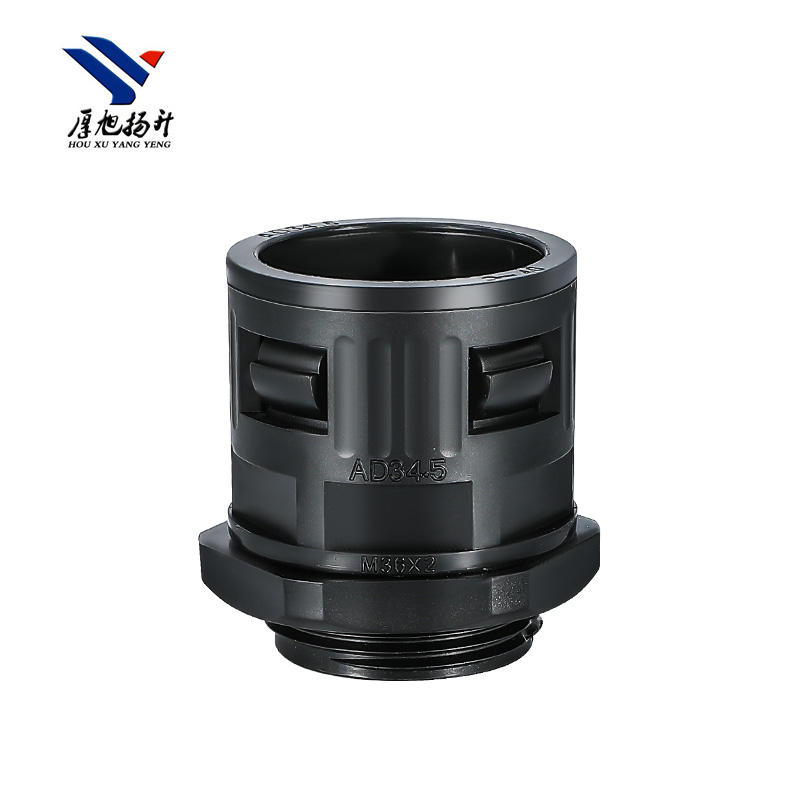
Separate the longitudinal seam using your fingers or a harness insertion tool, press the existing wire bundle into the core, and let the overlapping edges snap shut behind your hand. On double-layer nylon versions, the interlocking walls stay closed without tape or adhesives. Complete the run by snapping open-type conduit fittings or mounting clamps at bulkhead entry points and frame supports.
Can split wire loom be used in wet or outdoor environments?
Yes, provided you specify UV-stabilized PA66 nylon and a double-layer overlapping profile. While a slit seam cannot be submerged like a continuous IP68 closed tube, a dual-layer split wire loom effectively blocks dust, rain, and angled water spray (reaching up to IP54–IP65 protection when paired with compatible fittings). For outdoor routing, orient the seam downward so moisture drains away from the internal wire bundle.
Which electrical standards apply when specifying split flexible conduit?
Mechanical and electrical performance for conduit systems falls under IEC 61386, while polymer flammability is governed by UL 94 and nonmetallic flexible raceway safety is referenced under UL 1660 / NEC Article 362. Export-oriented OEMs should also verify RoHS and REACH certificates to confirm that the resin contains no restricted hazardous substances.